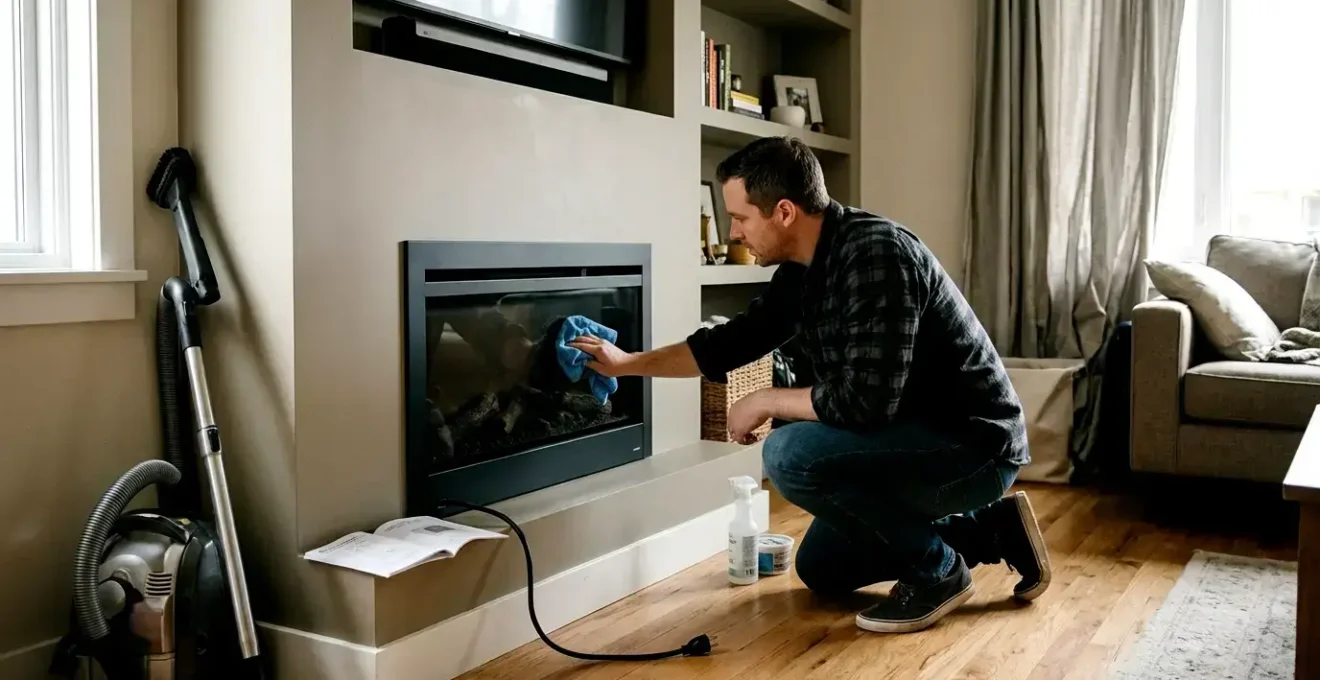
Maintaining an electric fireplace is primarily about preventing dust accumulation, keeping ventilation openings clear, protecting electrical components from moisture, and identifying faults before they become serious. Most routine maintenance can be performed without opening the appliance, provided the manufacturer’s instructions allow it.
Although electric fireplaces do not burn wood or require chimney sweeping, they still contain components that need attention. Heating elements, circulating fans, electrical connections, controls, and decorative flame-effect systems can be affected by dirt, restricted airflow, or improper cleaning.
A reliable maintenance routine starts with disconnecting power, allowing the appliance to cool, and cleaning accessible surfaces using suitable materials. Regular airflow checks and a pre-season inspection help identify problems that ordinary cleaning cannot resolve.
The essential distinction is between safe homeowner maintenance and internal servicing. Exterior cleaning and visual inspections are usually straightforward; damaged wiring, persistent overheating, unusual mechanical noises, and internal electrical faults require qualified attention.
Electric fireplace maintenance essentials
- Disconnect power and let the appliance cool completely before cleaning accessible glass, trim, or ventilation grilles.
- Remove dust with a soft brush, microfiber cloth, or suitable vacuum attachment. Never spray liquid cleaner into vents or electrical openings.
- Check ventilation clearances regularly and inspect the cord, controls, glass, and heating function before the heating season. Refer persistent faults to qualified service personnel.
- Why Dust Buildup Makes an Electric Fireplace Less Effective
- How to Clean Electric Fireplace Glass Without Scratches or Electrical Risks
- Cleaning or Professional Repair: What Does a Noisy Electric Fireplace Need?
- Why Spraying Cleaner Into Electric Fireplace Vents Can Damage Internal Components
- When Should You Inspect an Electric Fireplace Before the Heating Season?
- How to Maintain Airflow Around an Electric Fireplace That Needs No Flue
- Why Electric Fireplace Positioning Affects Heat Distribution in a Room
- Where Should You Place an Electric Fireplace for Comfort and Visual Impact?
Why Dust Buildup Makes an Electric Fireplace Less Effective
Dust buildup can reduce an electric fireplace’s effectiveness by obstructing intake grilles, restricting heated-air circulation, and accumulating around components that require ventilation. Restricted airflow can contribute to excessive internal temperatures and automatic heater shutdowns. Regular removal of accessible dust helps maintain normal operation and reduces the risk of heat-related damage.
Many electric fireplaces use a fan to draw room air through an intake, move it past an electric heating element, and distribute warmed air through an outlet. Dust collecting on grilles or within the airflow path can interfere with this process.
Internal dust may also accumulate around the blower and heating assembly. While contamination can interfere with operation, the precise effect on heat output or electricity consumption depends on the appliance. Cleaning should not be presented as a guaranteed way to reduce energy bills.
The Dimplex Revillusion electric fireplace owner’s manual explicitly warns that dust or dirt accumulation on or inside the appliance can cause heat buildup and eventual damage. For the covered models, the manufacturer recommends regular inspection and dust removal as required.
Dust can affect different parts of the appliance in different ways:
- Air intake and outlet grilles: Blockages may weaken warm-air circulation or contribute to overheating.
- Blower assembly: Accumulated dirt can interfere with moving parts, although unusual noises do not establish dust as the cause.
- Glass and flame-effect surfaces: Surface dust or residue may make simulated flames appear less clear without changing the actual heating output.
- Control and sensor areas: Dirt may interfere with accessible control surfaces or an obstructed remote-control receiver, but weak remote response can also result from batteries or other faults.
Several symptoms warrant a closer look: reduced airflow at the outlet, a recurring dusty odor during heating, unusually frequent thermal shutdowns, or a fan that sounds strained. A brief odor after a long period of inactivity may reflect dust being heated, but persistent burning smells, smoke, or abnormal heating require immediate shutdown and professional assessment.
Dust is a safety concern as well as a cleanliness issue. If internal temperatures rise because airflow is restricted, protective thermal cutoffs may activate. Repeated shutdowns should not be bypassed or treated as normal operation.
Keeping accessible grilles clear is a sensible first step. The same cautious approach applies to cleaning the fireplace’s most visible component: its glass front.
How to Clean Electric Fireplace Glass Without Scratches or Electrical Risks
Clean electric fireplace glass only after switching off the appliance, disconnecting its power supply, and allowing it to cool completely. Use a soft microfiber cloth and a cleaning product permitted by the manufacturer. Avoid abrasive materials, direct liquid spraying, and glass-panel removal unless the owner’s manual specifically authorizes these actions.
Glass cleaning helps preserve the clarity and visual depth of the simulated flames. Fingerprints, household dust, and cleaning residue can create a dull or streaked appearance, even when the flame-effect mechanism is functioning normally.
Unlike a wood-burning fireplace, an electric fireplace does not normally produce combustion soot on its viewing panel. Heavy dark deposits, unusual staining, or damage should therefore be investigated rather than automatically treated as ordinary soot.
For accessible glass, follow this procedure:
- Disconnect power. Turn the fireplace off and unplug it if it has an accessible plug. For hardwired units, isolate the appropriate electrical circuit using the manufacturer-approved procedure.
- Wait until the glass is cool. Do not assume that a recently operated heater is safe to touch simply because its flame effect is off.
- Remove loose dust. Gently wipe the surface using a clean, dry microfiber cloth.
- Clean remaining marks. If the manual permits, use a lightly dampened cloth with water or a manufacturer-approved cleaner. Mild diluted soap may be suitable for some surfaces, but it should not be assumed safe for every glass coating.
- Dry the panel thoroughly. Use a clean, lint-free cloth, then check for streaks and moisture near the edges before restoring power.
Ammonia-based glass cleaners are not universally prohibited, but some coatings and surrounding finishes may be incompatible with particular products. The safest decision rule is to follow the model-specific cleaning instructions rather than choosing a conventional household glass cleaner by default.
Abrasive sponges, scouring powders, and rough cloths can scratch or haze glass surfaces. Such damage may remain visible when the decorative flames illuminate the panel.
Do not loosen retaining hardware or remove a glass panel merely to clean fingerprints behind it. Some fireplaces have removable fronts intended for authorized maintenance, while others require specific disassembly procedures. Incorrect removal can damage mounting components, seals where fitted, or surrounding finishes.
If the glass is cracked, loose, or otherwise damaged, stop using the appliance and follow the manufacturer’s repair instructions. Cleaning cannot restore the integrity of a broken panel.
Once the glass is clean, any persistent rattling, grinding, or electrical buzzing should be assessed separately rather than assumed to be another cleaning problem.
Cleaning or Professional Repair: What Does a Noisy Electric Fireplace Need?
A noisy electric fireplace may need cleaning, repositioning, or professional repair, depending on the sound and accompanying symptoms. Light vibration or occasional clicking can occur during normal operation, while persistent grinding, worsening electrical buzzing, burning odors, or repeated breaker trips require further investigation. Start with external checks and avoid opening the appliance without manufacturer authorization.
Electric fireplaces can produce several normal operating sounds, particularly when a circulation fan or heating element starts and stops. A quiet bedroom may make these sounds more noticeable than a busy living room.
The following diagnostic grid identifies possible explanations. Sounds alone cannot confirm a specific internal failure.
| Sound | Possible explanation | Recommended response |
|---|---|---|
| Rattling or vibration | Uneven positioning, external trim movement, or loose accessible fittings | Check stability and manufacturer-approved exterior fasteners with power disconnected. |
| Grinding or scraping | Fan obstruction, worn moving components, or another mechanical fault | Stop operation and request qualified inspection if the sound persists. |
| Steady humming | Normal fan or electrical-component operation, or possible abnormal vibration | Compare with previous operation; seek service if new, loud, or worsening. |
| Occasional clicking or popping | Switching components or thermal expansion and contraction | Observe whether the sound is brief and associated with normal heating cycles. |
| Persistent electrical buzzing | Possible electrical-component or connection problem | Disconnect power and arrange qualified assessment, especially if other symptoms appear. |
Before requesting service, inspect the surrounding installation. A fireplace moved to another room may sit unevenly, contact furniture differently, or have restricted ventilation. Correcting the position according to the installation instructions may resolve vibration without internal repairs.
Also inspect accessible ventilation openings for dust or visible debris. Clean only those areas the owner is permitted to maintain. Do not insert tools through the grille to reach fan blades, wiring, or internal components.
Stop using the heater immediately if noise occurs alongside smoke, a persistent burning smell, a damaged cord, sparks, or repeated circuit-breaker operation. These symptoms should not be addressed through experimental cleaning or repeated restarting.
Warranty coverage matters when choosing between DIY work and professional service. Some manufacturers restrict internal repairs to authorized technicians, and unauthorized modifications or servicing may affect coverage depending on the warranty terms and applicable consumer law.
Record when the noise occurs, whether the heating function is active, and whether it changes with fan speed. These observations can help a technician distinguish normal operation from a developing fault.
When the problem appears related to dirt, the cleaning method itself becomes important: moisture introduced through a ventilation grille can create additional damage instead of fixing the original issue.
Why Spraying Cleaner Into Electric Fireplace Vents Can Damage Internal Components
Spraying liquid cleaner into electric fireplace vents can allow moisture or chemical residue to reach electrical connections, circuit boards, heating assemblies, and moving components. Depending on the product and where the liquid travels, this can contribute to corrosion, contamination, electrical faults, or damage. Ventilation openings should be cleaned externally using dry methods approved by the manufacturer.
Air grilles are designed to move air, not to contain cleaning liquid. Aerosol droplets or sprayed solutions can travel beyond the visible slats, particularly when applied directly toward an internal fan or heating assembly.
Moisture may create an immediate electrical problem or leave deposits that contribute to later deterioration. The timing and severity of damage are unpredictable, so an appliance that initially appears to work normally cannot be assumed unaffected by liquid intrusion.
The Napoleon Elevation electric fireplace installation and operation manual directs owners of the specified models to disconnect power before cleaning, use a vacuum or duster for ventilation areas, and avoid spraying the appliance with water.
Use two separate cleaning zones to prevent the wrong product from reaching the wrong component.
| Cleaning zone | Appropriate approach | What to avoid |
|---|---|---|
| Accessible glass, painted surfaces, plastic, and decorative trim | Use a soft cloth and the surface-specific cleaning method allowed by the manual. | Abrasive materials, incompatible chemicals, and liquid running into joints. |
| Air intake and outlet grilles | Use a dry soft brush, duster, or vacuum brush attachment from outside the appliance. | Sprays, soaking, tools pushed deep into openings, and unauthorized disassembly. |
To clean a grille, first disconnect power and wait for the appliance to cool. Move a soft vacuum attachment gently across the accessible slats, without forcing it into the unit. A soft detailing brush can loosen surface dust that the vacuum can then collect.
Compressed air deserves additional caution. Although sometimes used around electronics, it can drive dust farther into an enclosed fireplace, disturb components, or introduce propellant residue. Do not use it unless the appliance manufacturer specifically permits that method and provides suitable instructions.
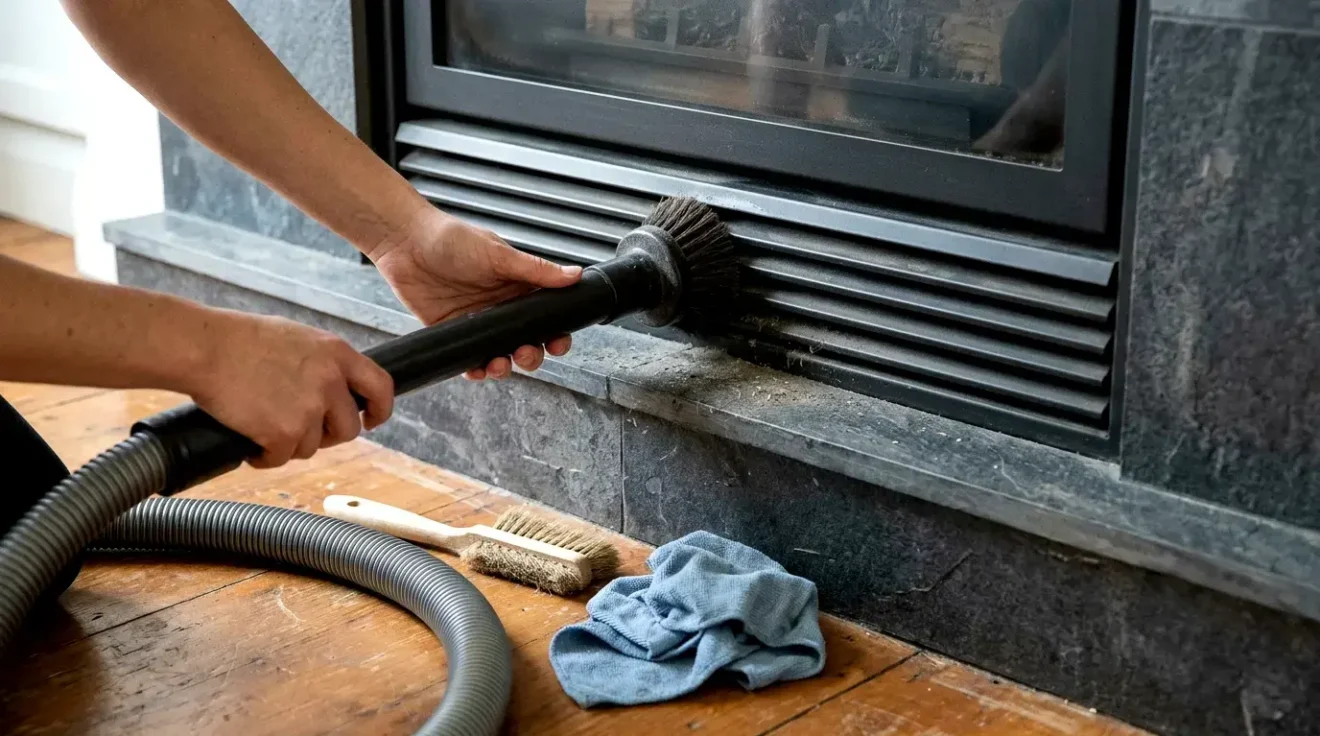
Never apply aerosol products while the heater is operating. Heated components, energized electrical parts, and potentially flammable aerosol formulations can create additional hazards.
If cleaning liquid has entered the appliance, keep it disconnected and consult the manufacturer or a qualified service professional before using it again. Simply waiting for visible surfaces to dry does not establish that hidden components are safe.
Vent cleaning is particularly useful before the heating season, when several months of inactivity may have allowed dust to collect around the appliance.
When Should You Inspect an Electric Fireplace Before the Heating Season?
Inspect an electric fireplace a few weeks before you expect to use its heating function regularly. This provides time to remove accumulated dust, verify ventilation clearances, test controls, and arrange repairs if necessary. Follow the inspection frequency in the owner’s manual; some manufacturers recommend at least annual inspection, including professional assessment for specified models.
An early-autumn inspection is a practical choice in many temperate regions, but the appropriate timing depends on local climate and actual heating habits. The objective is to check the unit before its first sustained period of use, not to follow a fixed calendar date.
After months of inactivity, accessible grilles may contain dust or lint, batteries in the remote may have deteriorated, and furniture or decorations may have moved closer to the heater. A pre-season check identifies these changes before regular heating begins.
Start with the electrical supply. Examine an accessible plug and cord for cuts, fraying, discoloration, deformation, or other visible damage. Do not use an appliance with a damaged supply cable. Hardwired electrical connections should remain closed and be inspected by qualified personnel when required.
Next, examine the glass, accessible ventilation grilles, and surrounding installation. Confirm that controls respond normally and that the remote works with suitable batteries.
Only after completing the visual checks, cleaning, and restoring power should you conduct a brief operational test. Check the decorative flames, fan operation, heat output, and any warning indicators. Stop the test if unusual noise, odor, overheating, or another fault appears.
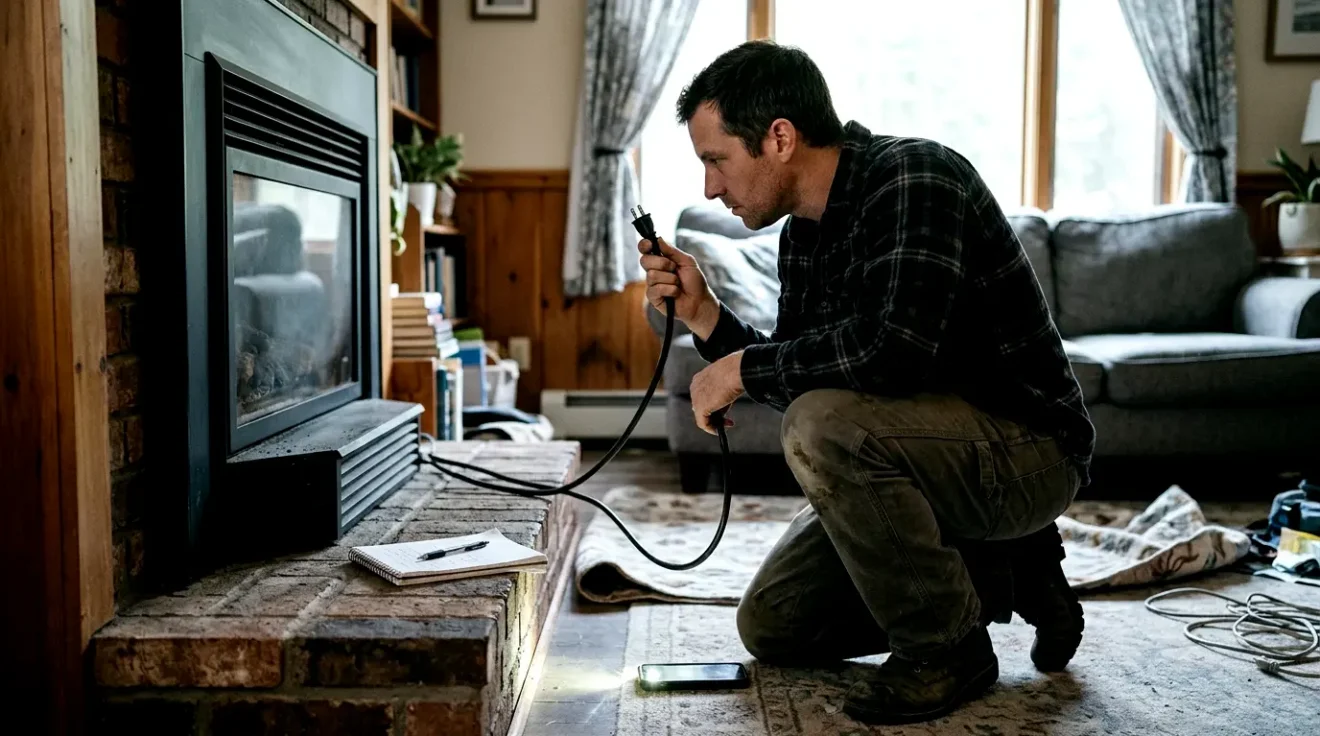
Keep the model number, serial number, purchase date, and manual together with a record of observed faults. These details help identify the correct parts and determine whether a repair may qualify for warranty service.
Five-step pre-season electric fireplace inspection checklist
- Check the power connection: Inspect the accessible cord and plug while disconnected. Record either “No visible damage” or the defect requiring service.
- Clear accessible ventilation: Remove visible dust using an approved dry method. Confirm that the intake and outlet grilles are visibly unobstructed.
- Inspect glass and placement: Check for cracks, loose components, and nearby obstructions. Record any condition that must be corrected before use.
- Test normal operation: After restoring power safely, check the controls, remote, flame effect, fan, and heater. Note whether each function operates normally.
- Update the maintenance record: Save the inspection date, model and serial numbers, purchase information, and any required service action in one accessible record.
Do not continue an operational test when a fault is apparent. If the heater repeatedly trips its thermal cutoff, investigate the underlying cause with the manufacturer’s support service rather than repeatedly resetting it.
Discovering problems early also makes warranty inquiries and planned service easier to manage before the appliance is needed for regular heating.
Between annual checks, one condition deserves continuing attention: the airflow available around the appliance can change whenever the room layout changes.
How to Maintain Airflow Around an Electric Fireplace That Needs No Flue
An electric fireplace that needs no flue still requires unobstructed airflow through its designed intake and outlet openings. Maintain the clearances specified by the manufacturer, remove dust from accessible grilles, and prevent furniture, rugs, or decorations from blocking ventilation. These measures help the heater circulate warm air and avoid unnecessary overheating.
Electric fireplaces do not require a chimney to discharge combustion gases because they generate heat electrically rather than by burning fuel. However, this does not make their ventilation openings optional.
Many models use fan-assisted airflow to carry heat from an internal heating assembly into the room. Restricting the intake can reduce available cooling and circulation air, while blocking the outlet can interfere with heat distribution.
Clearance requirements vary substantially between freestanding, recessed, wall-mounted, and built-in products. They may also differ according to whether a particular surface is an intake, an exhaust, or a permitted enclosure boundary.
Use the owner’s manual to identify the applicable distances for the exact model and installation arrangement. Check them against the current room setup rather than relying on a clearance that was measured when the fireplace was first installed.
Pay particular attention to common sources of obstruction:
- Furniture: Sofas, side tables, and media cabinets positioned too close to an outlet.
- Floor coverings: Rugs or thick carpeting that can interfere with bottom-mounted air intakes.
- Decorations: Seasonal displays, blankets, garlands, or other items placed near heated surfaces or ventilation openings.
- Accumulated dust: Lint collecting in grilles, particularly in rooms with carpeting, pets, or frequent fabric movement.
- Built-in surrounds: Panels or enclosure modifications that obstruct ventilation designed into the original installation.
A simple recurring check is to inspect every accessible grille while the fireplace is off and cool. Verify that the opening is not covered, remove surface dust as permitted, and confirm that nearby objects remain outside the manufacturer’s required clearance zones.
If a fireplace becomes unusually hot or repeatedly activates its protective cutoff, restricted airflow may be one possible cause. Other electrical or mechanical faults remain possible, so repeated shutdowns require appropriate troubleshooting rather than assumptions.
Keeping airflow unobstructed supports normal thermal management and may help prevent avoidable heat-related damage. It does not guarantee a particular component lifespan.
Once the ventilation path is clear, the direction in which heated air enters the room becomes the next consideration for comfort and effective placement.
Why Electric Fireplace Positioning Affects Heat Distribution in a Room
Electric fireplace positioning affects heat distribution because the heater releases warm air into a room with its own circulation patterns, obstructions, and temperature differences. Placement near seating areas can improve perceived comfort, while drafts, high ceilings, and blocked outlets may reduce the warmth reaching occupied spaces. The best position balances heat direction with safe installation clearances.
Fan-forced electric fireplaces move heated air away from the appliance and into the surrounding room. As this air mixes with cooler air, furniture arrangements and room geometry influence where the heat is felt.
Warm air also tends to rise through natural convection. In rooms with high ceilings, some warmth may accumulate above the occupied zone, especially when overall air circulation is limited.
A fireplace positioned near a frequently opened exterior door may warm an area affected by incoming cold air. Similarly, a unit facing a large open stairwell may contribute to circulation into adjoining spaces rather than concentrating warmth near the main seating area.
Placement options involve different practical compromises:
| Placement | Potential comfort benefit | Important limitation |
|---|---|---|
| Central wall | Can direct heat toward the main occupied area. | Furniture, traffic routes, and clearances must be considered. |
| Room corner | Can make use of otherwise underused wall space. | Airflow may be constrained by nearby walls or furniture if the unit is unsuitable for that arrangement. |
| Media center | Combines a visual focal point with supplemental warmth. | Heat outlet direction, electronics protection, and installation specifications are critical. |
The appliance’s rated heating capacity also matters. A decorative electric fireplace with limited heating output should not be expected to warm a large, poorly insulated open-plan space simply because it occupies a central position.
Before installation, consider the room’s size, insulation, door and window locations, ceiling height, seating arrangement, and the direction of the appliance’s heat outlet.
For a hypothetical example, imagine two otherwise identical rooms. In one, the fireplace directs warm air into an open seating area. In the other, a large cabinet sits close to the outlet. The first arrangement offers a clearer circulation path, although actual comfort still depends on the heater and room conditions.
Never improve heat direction by violating clearance requirements. A visually appealing but cramped position can create both circulation problems and unnecessary thermal stress.
These considerations lead to a final decision: choosing a location that is comfortable, visually suitable, electrically safe, and accessible for maintenance.
Key takeaways before choosing a location
- Confirm that the intended installation satisfies the exact model’s ventilation, enclosure, and combustible-material clearance requirements before judging appearance.
- Assess where warm air will travel relative to seating, drafts, and room boundaries rather than assuming the most prominent wall provides the best heating comfort.
- Plan for power access and future cleaning or servicing from the outset; a location that obstructs maintenance access may create recurring problems.
Where Should You Place an Electric Fireplace for Comfort and Visual Impact?
Place an electric fireplace where its installation requirements are satisfied, heated air can reach the occupied part of the room, and the flame display is visible from the main seating area. Prioritize electrical safety and manufacturer-specified clearances over appearance. The location should also provide practical access for cleaning, inspection, and future servicing.
A useful placement decision starts with three constraints: safe clearances, effective heat direction, and a clear visual sightline. A location is suitable only when its aesthetic advantages do not compromise the first two.
Different living spaces call for different choices.
- Living room focal wall: A central wall can make the simulated flames visible from several seats. Check that furniture does not obstruct the heat outlet and that nearby materials remain outside restricted areas.
- Bedroom: A fireplace may provide localized supplemental warmth and visual ambience. Avoid placing bedding, curtains, or other combustible materials too close, and follow the manufacturer’s instructions concerning unattended or overnight operation.
- Open-plan living space: Positioning near the principal occupied zone may be more useful than expecting a single unit to distribute heat evenly throughout several connected areas.
- Built-in or media wall: Follow the appliance’s specific framing, ventilation, and electrical installation instructions. Confirm compatibility with nearby televisions, cabinetry, and other electronics rather than assuming every electric fireplace is suitable for installation beneath a screen.
Electrical supply should influence the choice before any permanent installation work begins. For portable electric heaters, the U.S. Consumer Product Safety Commission heating safety recommendations advise plugging the appliance directly into a wall outlet instead of using extension cords or power strips.
Electric fireplace electrical requirements differ by model. A plug-connected unit should use the type of properly rated outlet specified in its manual, while a hardwired appliance requires an appropriate permanent electrical connection. Whether a dedicated circuit is required depends on the appliance instructions and applicable local electrical rules.
The CPSC also recommends keeping portable heaters at least 3 feet (approximately 0.9 m) from combustible materials. This is general portable-heater guidance, not a universal clearance specification for every electric fireplace. Fixed and recessed models must follow their own installation instructions.
For English-speaking markets outside the United States, consult the locally supplied manual and applicable electrical requirements. Outlet designs, voltage ratings, installation practices, and safety standards are not identical across countries.
Finally, assess how the chosen location affects future maintenance. Can the accessible grilles be cleaned without moving heavy furniture? Is the power isolation method accessible? Can a service professional reach the appliance if an internal fault develops?
A neatly integrated fireplace that cannot be inspected or serviced without dismantling surrounding furniture may be inconvenient over its working life. Maintenance access is therefore part of a successful installation, not simply an issue to address after a failure.
Before the next heating season, locate the owner’s manual, inspect the accessible power connection and ventilation areas, clean approved surfaces, and document any unusual behavior. If a defect is present, arrange qualified service before returning the heater to regular use. A practical maintenance routine begins with these manageable checks rather than unnecessary dismantling.
How often should an electric fireplace be cleaned?
Clean accessible surfaces and ventilation grilles whenever visible dust accumulates, and inspect the appliance at the frequency specified in its manual. Some manufacturers recommend inspection at least annually. Homes with pets, carpeting, or substantial airborne lint may require more frequent exterior cleaning. Always disconnect power and let the unit cool first.
Can an electric fireplace operate with the flame effect on but the heater off?
Many electric fireplaces offer independent flame-effect operation, allowing the decorative display to run without the heating function. Availability depends on the model. Even when the heater is disabled, keep ventilation openings unobstructed and follow the operating instructions. Switching off the heating function does not make the appliance electrically isolated for cleaning.
What should you do if an electric fireplace repeatedly shuts off while heating?
Stop using the heater and disconnect power safely. Check for visible external airflow obstructions and consult the troubleshooting section of the owner’s manual. Some models contain thermal cutoffs that respond to excessive temperatures. If shutdowns continue, contact the manufacturer or qualified service personnel rather than repeatedly resetting the appliance or bypassing its protection.
Is it safe to leave an electric fireplace plugged in when it is not being used?
Follow the manufacturer’s operating and shutdown instructions. Some permanently installed fireplaces are intended to remain connected to their electrical supply, whereas certain portable or plug-connected models may have different unplugging recommendations. Do not assume that switching off the flame effect disconnects all electrical components. Always isolate power as instructed before cleaning or servicing.
Can owners replace an electric fireplace fan or heating element themselves?
Internal fan and heating-element replacement should generally be handled by authorized or qualified service personnel unless the manufacturer explicitly provides an approved owner-replacement procedure. These repairs may involve electrical connections, protective devices, and heat-sensitive components. Check warranty conditions and model-specific service instructions before attempting any repair beyond permitted routine maintenance.