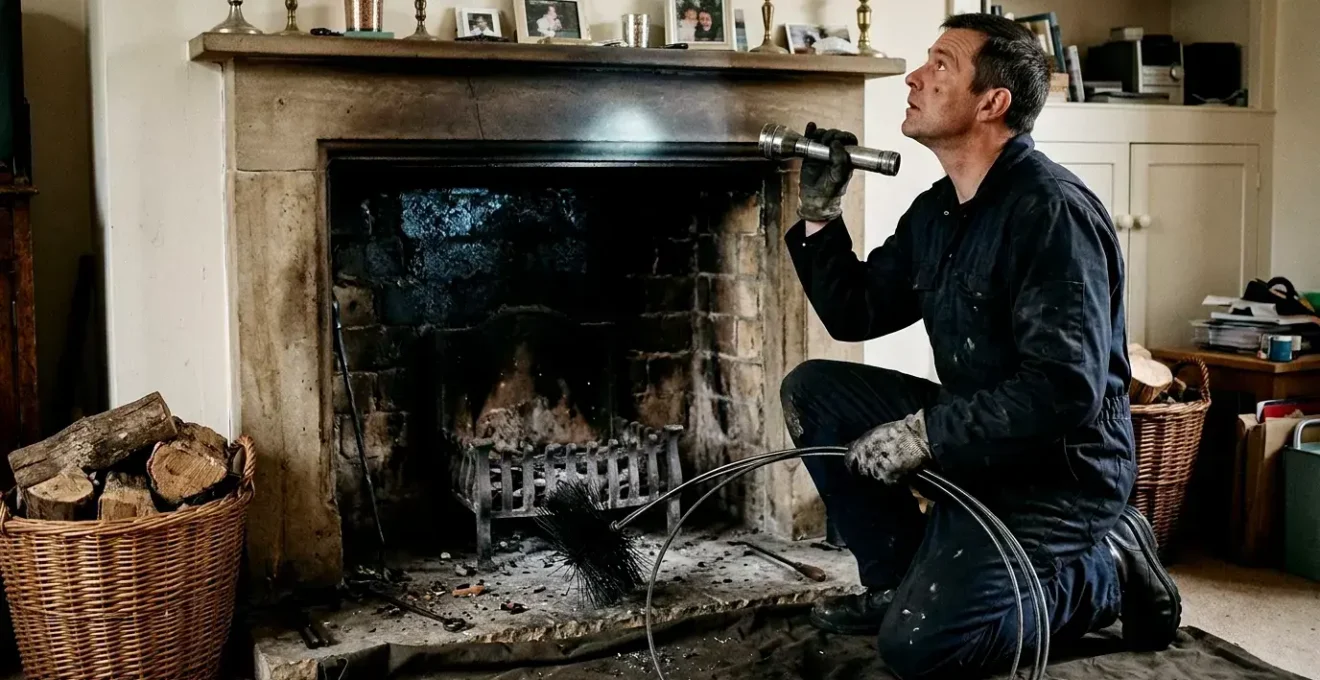
Creosote buildup is one of the most serious hidden hazards associated with wood-burning fireplaces. As wood smoke travels through a chimney, some combustion by-products can condense on cooler internal surfaces, leaving combustible deposits. Over time, these deposits may become thick, crusty or hard and glossy, increasing the risk of a chimney fire.
Preventing dangerous creosote buildup requires three essential measures: burning properly seasoned firewood, operating the fireplace with adequate combustion air and maintaining a suitable professional inspection and cleaning schedule. Recognising warning signs matters just as much. A shiny black coating, persistent tar-like odour or smoke returning into the room can indicate a problem that should be investigated before further use.
Not all chimney deposits look alike, and their appearance can affect how safely they can be removed. Understanding the difference between ordinary soot, crusty residues and glazed creosote helps homeowners recognise when routine maintenance is sufficient and when specialist treatment or a more detailed flue inspection is necessary.
Creosote Prevention: Essential Safety Points
- Burn dry, untreated wood with sufficient combustion air. Damp fuel and prolonged smouldering encourage smoke condensation inside the flue.
- Look for shiny, tar-like or crusted deposits, but remember that dangerous buildup may be hidden above the fireplace.
- Arrange professional sweeping and inspection at appropriate intervals. Stop using the fireplace if glazed creosote, smoke spillage or signs of a chimney fire are suspected.
- Why Does Burning Wood at Low Temperatures Increase Creosote Formation?
- How to Recognise Glazed Creosote Deposits Inside an Accessible Fireplace Area?
- Soot or Glazed Creosote: Which Chimney Deposits Are More Difficult to Remove?
- Why Creosote-Removing Logs Cannot Replace a Proper Chimney Inspection
- When Should You Stop Using a Fireplace Because of Suspected Creosote Deposits?
- Why Does Damp Firewood Produce More Smoke and Less Useful Heat?
- Chimney Sweep or CCTV Flue Inspection: Which Service Does Your Fireplace Need?
- How Often Should You Have Your Chimney Swept for Safe Wood-Burning?
Why Does Burning Wood at Low Temperatures Increase Creosote Formation?
Burning wood at excessively low combustion temperatures can increase creosote formation because incomplete combustion produces more unburned smoke compounds. When these compounds encounter sufficiently cool chimney surfaces, they condense and adhere to the flue walls. The temperature of the chimney lining, not simply the temperature of the flames, is therefore critical to deposit formation.
Wood releases gases, water vapour and airborne particles as it burns. Ideally, sufficient heat, oxygen and mixing allow much of the combustible gas mixture to burn inside the appliance. When combustion is inefficient, more unburned material passes into the chimney.
The EPA‘s frequently asked questions about wood-burning appliances explain that smoke by-products can condense against cooler chimney walls. Restricted combustion air, unseasoned fuel and cold flue conditions encourage this process.
Deposits can appear in several forms, although they do not necessarily develop through a fixed, predictable sequence:
- Condensed tar-like residue: Smoke compounds adhere to cooler surfaces, sometimes creating sticky brown or black deposits.
- Dry or crusty accumulation: Deposits may appear flaky, granular or layered as combustion and chimney conditions change.
- Glazed creosote: Hard, glossy, strongly adherent deposits may form under unfavourable operating conditions and can be particularly difficult to remove.
A smouldering fire is not the same as a properly controlled moderate fire. Closing the combustion-air controls excessively can deprive the fuel of oxygen, allowing the wood to release smoke without burning its gases efficiently. This is especially problematic if the flue is also cold.
Conversely, a suitable low-output setting on a correctly operated modern catalytic wood stove can burn more cleanly than a conventional appliance operating under oxygen-starved conditions. Low heat output alone does not establish that creosote formation is excessive.
Visible smoke is also an imperfect indicator. A fireplace producing little obvious smoke outside may still accumulate deposits internally, particularly during prolonged low-temperature operation.
Maintaining an appropriate burn rate according to the appliance manufacturer’s instructions reduces the conditions that favour condensation. The next challenge is recognising deposits that have already formed.
How to Recognise Glazed Creosote Deposits Inside an Accessible Fireplace Area?
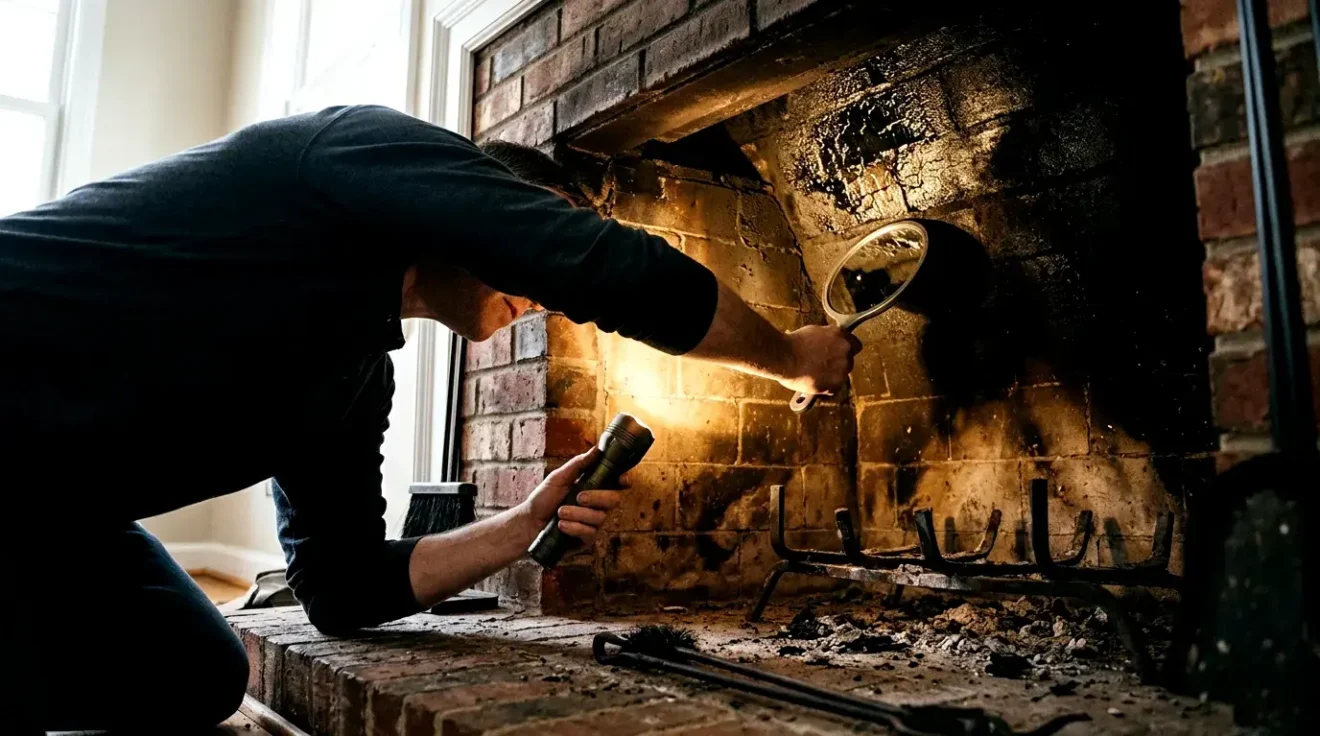
Glazed creosote typically appears as a hard, shiny black or dark brown coating that resembles hardened tar or enamel. It may look smooth, glassy or cracked rather than dusty. Homeowners can sometimes recognise these features with a flashlight and mirror, but an inspection from the fireplace opening cannot establish the condition of the entire chimney.
Begin only when the fireplace is completely cold, with no hot embers or active combustion. Use a bright flashlight to examine the accessible firebox, the area around the damper and any visible smoke-chamber surfaces. A small inspection mirror can help reveal areas that cannot be seen directly.
For a wood stove, inspect only those connector surfaces that are safely visible without dismantling components. Do not remove stove pipes, open inaccessible flue sections or reach into the chimney.
The appearance of a deposit can provide an initial indication of its characteristics:
- Powdery soot: Usually dull black, fine or fluffy, and relatively loose. It can be removed by suitable professional brushing.
- Crusty deposits: Dark, brittle or layered accumulations that may flake or fracture.
- Glazed creosote: Smooth or irregular hard deposits with a glossy, tar-like finish, sometimes showing cracks resembling crazed enamel.
Visual identification is safer than testing deposits by touch. Do not rub, scrape or chip suspected glazed creosote, and do not assume that a deposit is harmless simply because it is thin or does not appear glossy.
The most significant limitation of a homeowner’s visual check is access. Creosote can accumulate in bends, flue offsets, changes in cross-section and upper chimney sections where cooling conditions differ. None of these areas may be visible from the hearth.
Indirect warning signs deserve attention too. A persistent smoky or tar-like smell, particularly during humid weather, may indicate deposits. Falling black fragments can suggest accumulated material, while smoke spilling into the room may indicate restricted airflow, blockage or other venting problems.
These symptoms are not exclusive to creosote. Chimney obstructions, inadequate combustion air and structural defects can produce overlapping warning signs.
If a hard, glossy deposit is visible, stop using the fireplace and arrange professional assessment rather than attempting to remove it with household tools.
Soot or Glazed Creosote: Which Chimney Deposits Are More Difficult to Remove?
Glazed creosote is generally more difficult to remove than loose soot because it forms a hard, strongly adherent coating on chimney surfaces. Ordinary soot often responds to appropriate brushing, whereas glazed deposits may require specialist mechanical techniques or professional chemical pretreatment. Both can create hazards, but glazed creosote presents a particularly challenging combination of combustibility and removal difficulty.
Although soot and creosote are often discussed together, their physical properties influence how a chimney professional approaches cleaning.
| Criterion | Loose Soot | Glazed Creosote |
|---|---|---|
| Appearance | Black, dull, powdery or fluffy | Dark, hardened, shiny or enamel-like |
| Attachment to flue walls | Usually relatively loose | Often strongly bonded to the lining |
| Removal | Frequently removable with appropriate brushes | May require specialist mechanical cleaning or chemical pretreatment |
| Fire hazard | Combustible when sufficient material accumulates | Combustible and potentially difficult to eliminate completely |
| Professional response | Routine sweeping when indicated | Assessment of extent, deposit characteristics and suitable treatment |
A standard chimney brush works by applying friction to loosen residues. It is often effective on dry, friable material but may slide over hardened glaze without removing enough of it.
Depending on the chimney construction and the condition of its lining, a qualified sweep may use specialist rotary equipment, compatible cleaning heads or professionally selected chemical treatments. Some difficult deposits require more than one treatment and cleaning visit.
These methods are not interchangeable. Aggressive mechanical tools, particularly chain-based equipment, can damage unsuitable flue liners or chimney components. Tool selection should therefore follow an assessment of the chimney material and its condition.
The Chimney Safety Institute of America‘s homeowner safety FAQs explain that professional treatment can help alter hard or tacky deposits to facilitate removal, while certain fractured deposits may respond to rotary cleaning.
1/8 inch (approximately 3.2 mm)
The CSIA recommends sweeping masonry fireplaces when soot reaches this depth, or sooner if glazed creosote is present. This is professional guidance for masonry fireplaces, not a universal safe limit or legal threshold.
Chimney Safety Institute of America, homeowner safety guidance.
One dangerous misconception is that lighting an unusually hot fire will burn away accumulated soot or creosote. Deliberately igniting deposits is not a cleaning method. It can trigger an uncontrolled chimney fire, exposing flue liners, masonry and adjacent building materials to damaging heat.
Once substantial or glazed deposits are suspected, professional evaluation is more reliable than improvised cleaning. That same distinction matters when considering commercially available creosote-removing logs.
Why Creosote-Removing Logs Cannot Replace a Proper Chimney Inspection
Creosote-removing logs cannot replace chimney inspection because chemical treatments do not verify whether deposits have been removed or whether the flue is structurally sound. Some products may help modify certain deposits, making subsequent cleaning easier, but they cannot identify cracked liners, damaged joints or hidden obstructions. A chimney can remain unsafe even after a treatment log has burned.
Commercial chimney-treatment logs contain chemical additives intended to affect some combustion deposits. Depending on the formulation and deposit type, these substances may help dry, embrittle or loosen residue over time.
However, chemical modification is not the same as physical removal. Thick or strongly bonded glazed creosote may remain attached to the chimney lining despite treatment. Product performance also varies, so claims made for one formulation should not be applied automatically to others.
There is another important consideration: loosened deposits do not always fall into an easily accessible area. Material may accumulate on a smoke shelf, around a damper, inside an offset or on appliance components. In some circumstances, this accumulation can contribute to restricted airflow or obstruction.
Homeowners should therefore avoid assuming that material falling into the firebox proves the entire chimney has been cleaned.
A simple decision framework helps establish when a treatment product is inappropriate:
| Chimney Condition | Recommended Approach |
|---|---|
| Professionally inspected system with minor deposits | A suitable product may be considered as supplementary maintenance, if permitted by the appliance and product instructions. |
| Noticeable soot approaching 1/8 inch in a masonry fireplace | Arrange professional sweeping rather than relying on a treatment log. |
| Any visible glazed creosote | Stop use and seek specialist assessment and removal. |
| Strong tar odour, restricted draft or falling deposits | Arrange inspection to identify deposits, obstructions or other defects. |
| Previous suspected or confirmed chimney fire | Do not operate the fireplace until a qualified professional has evaluated the system. |
A proper chimney inspection examines more than residue. It can assess the visible condition of the lining, joints, smoke chamber, chimney termination and relevant appliance connections. Where necessary, internal imaging can reveal areas that cannot otherwise be inspected adequately.
Even a treatment that successfully loosens deposits cannot determine whether the chimney is suitable for continued operation.
If the chimney has persistent symptoms or suspected glaze, the priority is diagnosis and appropriate cleaning, not another treatment cycle. Certain warning signs require suspending fireplace use immediately.
When Should You Stop Using a Fireplace Because of Suspected Creosote Deposits?
Stop using a wood-burning fireplace when you notice glazed creosote, persistent tar-like odours, smoke entering the room or unusual roaring and crackling from the chimney. Any suspected chimney fire requires emergency attention, even if it appears to stop quickly. Do not relight the fireplace until a qualified professional has confirmed that the chimney is safe.
Creosote buildup does not always produce obvious symptoms before ignition. However, several warning signs indicate that continued operation is inappropriate.
- Glossy black or tar-like deposits: Visible glaze suggests a deposit that requires professional assessment.
- Persistent strong odour: A pronounced creosote smell may indicate accumulated residues or another venting problem.
- Smoke spilling into the room: Smoke spillage can indicate a blocked, poorly drafting or otherwise malfunctioning chimney and creates an immediate indoor air-quality hazard.
- Unexpected roaring, rumbling or crackling: Sounds originating from the chimney may indicate burning deposits.
- Flames or sparks emerging from the chimney top: These are potential signs of an active chimney fire.
- Any previous suspected chimney fire: The system requires examination before reuse, regardless of whether obvious damage is visible.
A chimney fire can expose its lining and surrounding structure to intense heat. Possible consequences include cracked flue tiles, failed mortar joints, warped metal components and concealed damage. Not every chimney fire produces the same damage, but a short or apparently minor incident cannot be assumed harmless.
For an active or suspected chimney fire, follow this emergency sequence:
- Stop adding fuel. If it is safe to do so, close the stove’s combustion-air controls according to the manufacturer’s emergency instructions. Do not enter a smoke-filled area or attempt to handle hot components.
- Call the fire service immediately using the local emergency number. Do not wait to see whether the fire extinguishes itself.
- Evacuate everyone to a safe location, especially if flames, heavy smoke or signs of fire spread are present. Keep people outside until emergency personnel confirm it is safe.
- Do not pour water into the hot chimney, climb onto the roof or attempt improvised extinguishing methods.
- After the incident, keep the fireplace out of service until a qualified chimney professional has completed the necessary cleaning and evaluation.
The CSIA’s advice on what to do after a chimney fire emphasises professional assessment before reuse. Internal video inspection can help reveal damaged flue tiles, mortar joints and metal components that are not visible from the fireplace opening.
There is an important difference between temporary maintenance-related suspension and a system that requires repair. Light deposits may be addressed through suitable sweeping, provided the chimney is otherwise safe. Extensive glaze, cracked liners or damaged joints may require specialist cleaning, repair or relining before the system can be returned to service.
Five Checks Before Returning a Suspect Chimney to Service
- Record the warning signs: Write down any observed odour, smoke spillage, glossy deposits or unusual chimney noises, including when they occurred. Keep a dated observation record.
- Document visible evidence safely: If the fireplace is cold and the area is accessible, photograph visible deposits without scraping or dismantling components. Save the photographs for the inspector.
- Suspend fireplace use: Leave the appliance unlit until the suspected hazard has been evaluated. Record that the fireplace is out of service.
- Arrange a qualified inspection: Describe the symptoms and any suspected chimney-fire history when booking. Obtain an appointment confirmation identifying the requested assessment.
- Obtain written clearance before reuse: Request a report identifying findings, completed cleaning, necessary repairs and whether the chimney is suitable for operation. Retain the documentation.
After an unsafe chimney has been assessed and made suitable for use, prevention begins with the fuel. Wet firewood is one of the most common controllable contributors to inefficient combustion.
Why Does Damp Firewood Produce More Smoke and Less Useful Heat?
Damp firewood produces more smoke and less useful heat because part of the energy released during combustion is consumed heating and evaporating water within the logs. This cooling effect can interfere with efficient combustion, allowing more unburned smoke compounds to enter the chimney. Those compounds may subsequently condense on cooler flue surfaces and contribute to creosote buildup.
Freshly cut wood can contain substantial moisture. Before effective combustion occurs, much of that water must be driven from the fuel. If the fire struggles to maintain suitable temperatures, combustion becomes less complete and smoke production can increase.
The result is a combination of reduced useful heating, potentially dirtier combustion and greater opportunities for chimney deposits to form.
For ordinary domestic wood-burning, a practical target is firewood with a moisture content below approximately 20%, measured using an appropriate wood moisture meter. Appliance and local fuel requirements should also be followed.
Homeowners can look for preliminary signs that logs have dried:
- Visible end-grain cracks in some seasoned logs.
- A relatively clear, hollow sound when two dry pieces are knocked together.
- Lower weight compared with similarly sized pieces of the same species when freshly cut.
These signs are not reliable substitutes for measurement. Species, log size and drying conditions affect their usefulness.
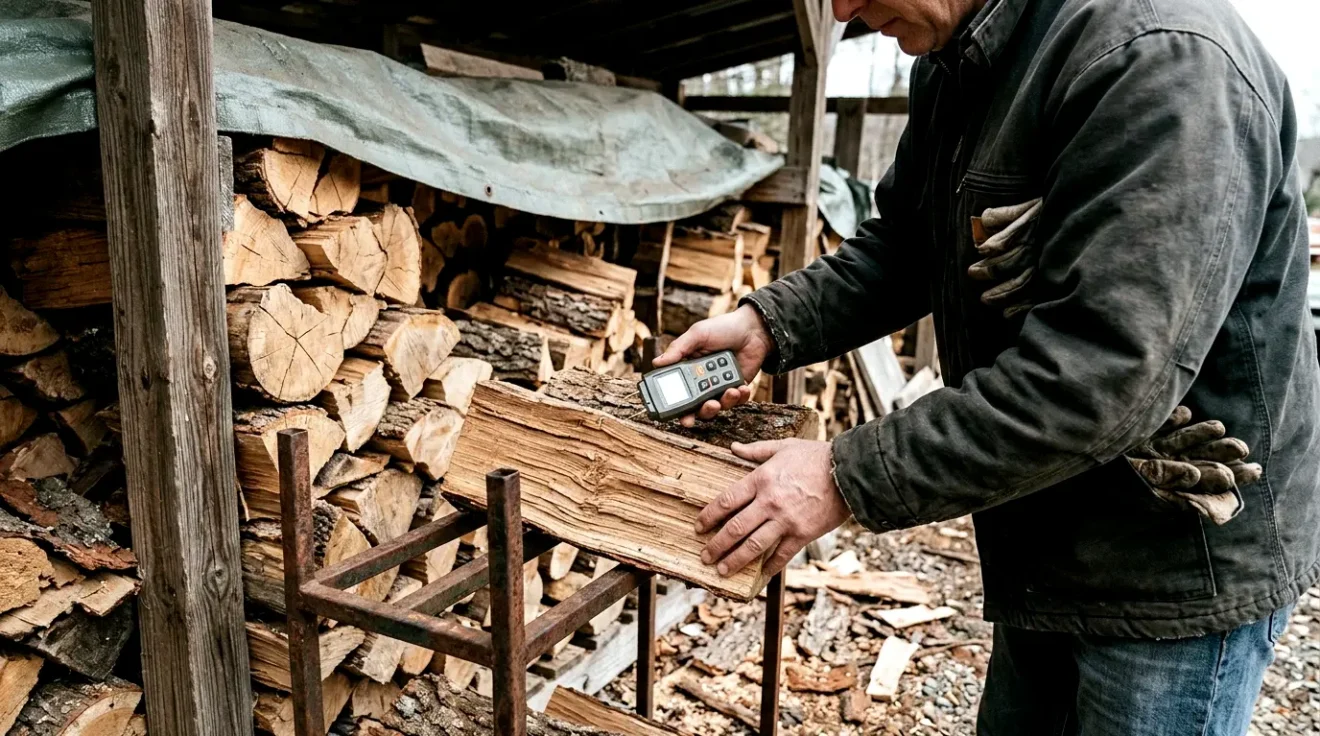
To check moisture more meaningfully, split a representative log and measure the newly exposed interior surface using a meter configured for the relevant wood type. Checking only the exterior can give a misleading impression because the outside may dry faster than the centre.
Proper seasoning also depends on storage conditions. Split logs into manageable pieces, stack them off the ground and leave gaps that permit air circulation. Protect the top from rain while keeping the sides sufficiently open for ventilation.
Drying time varies considerably. Small pieces of some softwoods may season faster than dense hardwood logs, but climate, initial moisture, airflow and log dimensions all matter. A universal drying period is therefore less useful than checking the actual fuel.
Fresh softwood should not be assumed suitable simply because it can ignite readily. Properly seasoned, untreated softwood may be used in appliances that permit it, while fresh resinous wood can contribute to smoky combustion.
Never burn painted, chemically treated or otherwise contaminated timber. These materials can release harmful pollutants and may introduce residues unrelated to ordinary seasoned firewood.
Even with dry fuel and careful fire management, deposits can still accumulate. Professional cleaning and internal examination address different aspects of that remaining risk.
Chimney Sweep or CCTV Flue Inspection: Which Service Does Your Fireplace Need?
A chimney sweep removes soot, creosote and other accessible deposits, whereas a CCTV flue inspection uses a camera to assess the chimney’s internal condition. Routine maintenance may require sweeping and a standard inspection, while suspected damage, unexplained blockages or previous chimney fires can justify more detailed internal imaging. Neither service automatically replaces the other.
The distinction is between cleaning and diagnosis. A chimney can be relatively clean yet structurally defective. Equally, a sound liner can contain enough combustible residue to require sweeping.
During professional sweeping, appropriate brushes and equipment are used to remove deposits from relevant chimney passages. In an open fireplace, adequate cleaning may include the flue and smoke chamber, not merely the visible firebox.
CCTV inspection addresses questions that brushing cannot answer reliably. A camera can help identify:
- Cracked or displaced flue-liner sections.
- Degraded mortar joints or separated metal chimney joints.
- Localised glazed deposits in less accessible areas.
- Partial obstructions caused by debris, nesting material or fallen chimney components.
- Signs of heat-related damage following a chimney fire.
Video inspection has limits. Heavy deposits may obscure the underlying liner, making prior cleaning necessary. Imaging also cannot guarantee detection of defects hidden beyond the visible internal surface.
| Situation | Service to Consider | Reason |
|---|---|---|
| Routine seasonal maintenance | Standard inspection and sweeping when necessary | Checks general condition and removes accumulated deposits. |
| Unusually hard or recurring creosote buildup | Professional sweeping assessment, potentially followed by CCTV | Establishes deposit extent, treatment needs and possible underlying problems. |
| Previous suspected or confirmed chimney fire | Detailed professional assessment, often including internal video inspection | Investigates possible heat damage before reuse. |
| Buying a home with an existing fireplace | Inspection, with CCTV where condition or history warrants it | Helps identify defects and maintenance needs that are not obvious during a viewing. |
| Replacing or changing a wood-burning appliance | Suitability and condition assessment, with CCTV if indicated | Helps determine whether the existing flue is appropriate and serviceable. |
Select a properly trained, qualified and insured chimney professional familiar with the fireplace or stove type. Appropriate certifications and service requirements vary between countries, so credentials should be checked against recognised local schemes.
Ask what the service includes before booking. A sweep certificate or cleaning record is useful, but it should not be interpreted as proof that every concealed structural defect has been ruled out.
Where significant problems are identified, request written findings, photographs where available and a clear explanation of recommended repairs. These records can assist with future maintenance, contractor discussions and any relevant insurance documentation.
The correct combination depends on observed deposits, appliance history and chimney condition. Once the appropriate service is clear, the next decision is how frequently maintenance should be scheduled.
Key Takeaways Before Planning Chimney Maintenance
- An annual appointment is not automatically enough for a heavily used wood-burning fireplace; cleaning needs depend on actual deposits and operating conditions.
- UK and US professional guidance can differ, so maintenance schedules should follow the relevant local recommendations and appliance instructions.
- Documented inspection findings are more informative than a calendar reminder alone, particularly when glaze, poor draft or previous heat damage is involved.
How Often Should You Have Your Chimney Swept for Safe Wood-Burning?
Wood-burning chimneys should receive regular professional inspection and be swept as often as their operating conditions require. In the United States, professional guidance commonly recommends annual inspection and cleaning when necessary. In the United Kingdom, HETAS recommends sweeping wood-burning chimneys at least twice a year. Heavy use, poor combustion or unusual deposits may require more frequent attention.
There is no universally safe sweeping interval for every fireplace. A chimney serving an occasional open fire can accumulate deposits differently from one connected to a stove operating throughout the heating season.
Usage matters, but so do fuel moisture, appliance design, combustion-air management, chimney insulation and the condition of the flue.
The following factors can help homeowners evaluate whether their normal maintenance schedule deserves review:
- Frequency of use: Daily or prolonged winter operation may justify additional sweeping compared with occasional use.
- Fuel quality: Repeatedly burning damp or insufficiently seasoned wood increases the conditions that favour deposits.
- Combustion behaviour: Extended smouldering and inappropriate restriction of combustion air may increase creosote formation.
- Chimney conditions: Cold flue surfaces, poor draft or repeated condensation problems may warrant investigation.
- Observed deposits: Noticeable soot, glazed residue, tar odours or falling debris can justify earlier professional attention regardless of the calendar.
Professional guidance also differs geographically. The Chimney Safety Institute of America recommends annual chimney inspection and sweeping when required. For masonry fireplaces, its guidance identifies approximately 1/8 inch of soot accumulation as a cleaning threshold, with earlier action whenever glazed creosote is present.
In the UK, HETAS recommends a minimum of two sweeps per year for wood-burning chimneys. Its consumer guidance identifies before the heating season and after the peak heating period as useful maintenance points.
These are professional recommendations, not a single international legal rule. Requirements may differ between England, Scotland, Wales, Northern Ireland, the United States, Canada, Australia and other English-speaking jurisdictions. Local building, fire-safety and environmental regulations must be considered separately.
In particular, UK Smoke Control Area rules should not be interpreted as creating a universal statutory annual chimney-sweeping requirement. They address smoke-control obligations; sweeping frequency and any other applicable duties must be checked against the relevant local provisions.
Homeowners should also review appliance warranty instructions and their home-insurance policy. Some documents may impose specific servicing, recordkeeping or maintenance conditions, but these requirements should never be assumed identical across manufacturers or insurers.
Keeping a simple maintenance file can make future decisions easier. Record inspection dates, sweeping dates, observations, remedial work and any written clearance following a chimney problem.
Most importantly, calendar-based servicing should not override immediate warning signs. Smoke entering the room, visible glaze, persistent tar odours or a suspected chimney fire require prompt attention even if the previous sweep was recent.
Before the next heating season, check the condition of stored firewood, review how the fireplace is operated and arrange the professional inspection or sweeping appropriate to its use. If any warning signs are already present, leave the fireplace unused until the cause has been assessed and the system is confirmed safe.
Can a chimney have dangerous creosote even if no deposits are visible from the fireplace?
Yes. Creosote can accumulate higher in the flue, around offsets and in other areas that cannot be viewed from the firebox. A clean-looking hearth does not establish that the chimney is free of combustible deposits. Professional inspection is necessary when internal buildup or unsafe operation is suspected.
Does a stainless-steel chimney liner prevent creosote buildup?
No. Stainless-steel liners can still collect creosote when smoke contains unburned compounds and flue surfaces are sufficiently cool. A correctly specified, installed and insulated liner may help support suitable chimney performance, but dry fuel, appropriate combustion and regular maintenance remain essential.
Can a chimney fire occur without a loud roaring sound?
Yes. Not every chimney fire produces an obvious roar or visible flames at the chimney top. Some incidents may be brief or go unnoticed. Unusual heat damage, altered chimney performance or other evidence suggesting a previous fire should prompt professional evaluation before continued use.
Can a household vacuum cleaner safely remove chimney soot?
An ordinary household vacuum is not a suitable substitute for professional chimney-cleaning equipment. Fine soot can escape through unsuitable filtration, while hidden embers can create a fire hazard. Cleaning the visible firebox also does not remove deposits throughout the flue or smoke chamber. Suitable specialist equipment and professional sweeping are needed for chimney deposits.
Should a fireplace be used immediately after a professional chimney sweep?
Only if the chimney and appliance are considered suitable for operation. Sweeping removes deposits but may reveal damaged components, unresolved glazed creosote or other defects requiring attention. If the professional identifies a safety concern or recommends further inspection, do not use the fireplace until the necessary work has been completed and the system has been cleared for use.