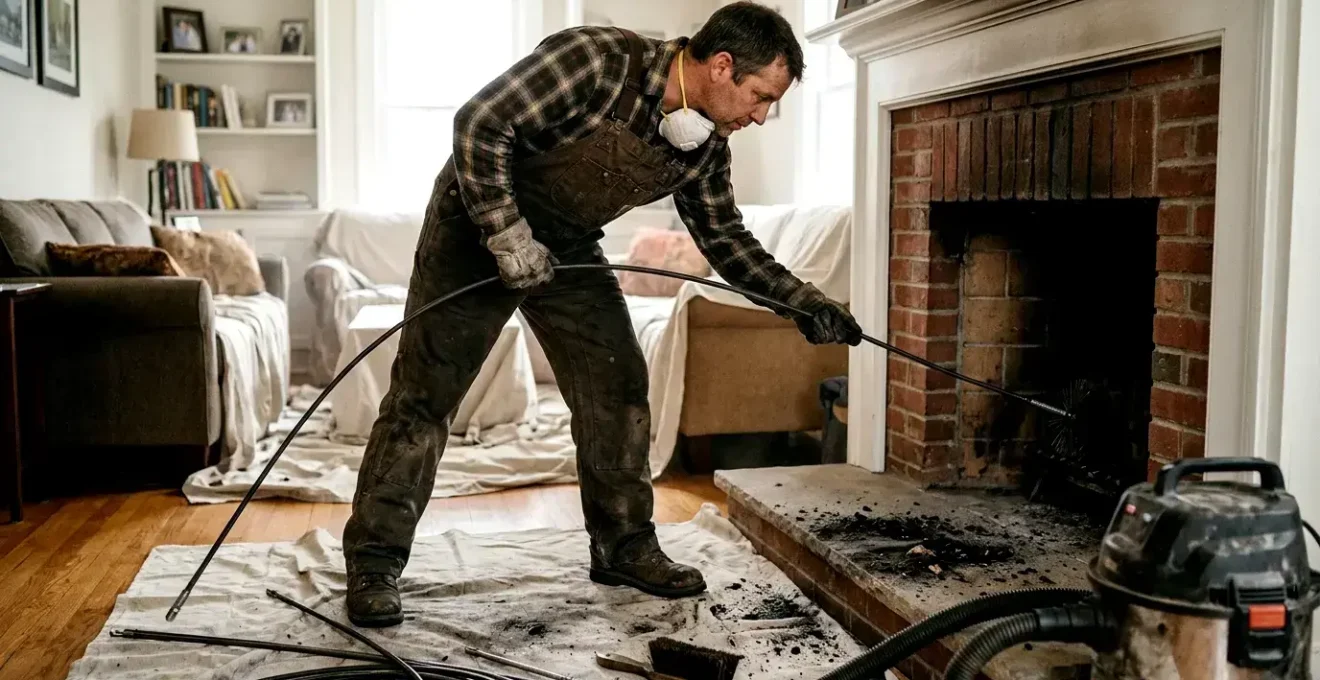
How often should a wood-burning chimney be swept? The appropriate schedule depends on how frequently you burn wood, the quality of your fuel, your appliance and the requirements that apply where you live. In the UK, HETAS recommends at least two sweeps annually for wood-burning systems, with additional attention for heavily used appliances. Other countries and jurisdictions may follow different professional guidance or legal requirements.
A fireplace used occasionally on winter evenings does not accumulate deposits in the same way as a stove providing daily household heating. Yet infrequent use does not eliminate the need for inspection: bird nests, damaged liners and deteriorating masonry can create hazards even when relatively little wood has been burned.
A reliable maintenance routine therefore combines a scheduled professional sweep with attention to combustion habits, seasonal inspections and warning signs. The aim is not simply to remove black soot, but to keep the entire flue system suitable for safe operation.
Chimney sweeping: the essential safety rules
- Start with local guidance: HETAS recommends at least twice-yearly sweeping for wood-burning systems in the UK; check the rules and professional recommendations applicable to your property.
- Match maintenance to actual use: Daily heating, damp firewood and prolonged smouldering can justify additional professional attention.
- Never ignore warning signs: Smoke entering the room, tar deposits, unusual odours or suspected blockages require investigation before further use.
- Why Do Frequently Used Wood Fireplaces Need More Regular Chimney Sweeping?
- How to Prepare Your Home for a Chimney Sweeping Appointment?
- Chimney Sweep or CCTV Flue Inspection: Which Service Does Your Fireplace Need?
- Why a Chimney Can Remain Unsafe Even After Visible Soot Has Been Removed
- When Is the Best Time to Schedule Chimney Sweeping Before Winter?
- How to Recognise Glazed Creosote Deposits Inside an Accessible Fireplace Area?
- Why Bird Nests and Debris Can Cause Sudden Fireplace Draft Problems
- How to Inspect a Fireplace Firebox for Damage Before Using It?
Why Do Frequently Used Wood Fireplaces Need More Regular Chimney Sweeping?
Frequently used wood fireplaces need more regular sweeping because every burning session can contribute soot and creosote to the chimney. Daily operation creates more opportunities for deposits to accumulate, especially when combustion is incomplete or the flue remains relatively cool. Sweeping frequency should therefore reflect actual burning habits while meeting applicable local requirements and professional guidance.
Wood smoke contains particles, vapours and combustible compounds. As these gases travel through cooler chimney sections, some constituents condense on the internal surfaces. Repeated burning can produce increasingly thick deposits, particularly where the chimney cools rapidly or combustion is inefficient.
Slow-burning does not necessarily mean cleaner-burning. Restricting the air supply for prolonged overnight burns can increase smoke production and encourage condensation. In airtight homes, poor ventilation or insufficient combustion air may aggravate performance, although the effect depends on the appliance and its approved operating settings.
The following grid helps households assess their maintenance needs. It is a practical categorisation, not a validated formula or substitute for local requirements.
| Fireplace use | Maintenance category | Practical approach |
|---|---|---|
| Occasional evening fires or weekend use | Lower usage | Arrange routine professional maintenance and comply with the applicable minimum, even if deposits appear limited. |
| Daily fires during the heating season | Moderate to high usage | Plan scheduled sweeping and ask whether an additional heating-season check is appropriate. |
| Wood as the sole or primary heat source, with prolonged daily operation | High usage | Agree on a usage-sensitive inspection and sweeping schedule with a qualified professional. |
At least twice a year
HETAS’s recommended minimum sweeping frequency for wood-burning chimneys in the UK, with more frequent sweeping potentially appropriate for heavily used appliances. This is professional guidance, not a universal legal minimum.
HETAS advice on chimney sweeping frequency and warning signs
Insurance conditions, applicable building or fire-safety rules and manufacturer instructions must also be checked. Some jurisdictions have specific inspection or documentation requirements, while others rely primarily on general safety obligations and professional standards. Do not assume that a rule from another country applies to your home.
The most useful next step is to record how often the fireplace operates and whether it produces unusual smoke or deposits. That information also helps the sweep prepare for the appointment.
How to Prepare Your Home for a Chimney Sweeping Appointment?
Prepare for a chimney sweeping appointment by allowing the fireplace to cool completely, removing unburnt fuel, clearing the surrounding area and protecting nearby furnishings. Keep previous maintenance records and any notes about smoke or draught problems available. Confirm access arrangements with the contractor before the visit, especially if roof access or appliance disassembly may be necessary.
A straightforward preparation routine reduces delays and helps contain soot:
- Stop using the fireplace in advance. Allow sufficient time for the appliance, embers and ash to cool completely. Leaving at least 24 hours without a fire is a cautious planning rule, but it does not guarantee cooling; follow the sweep’s specific instructions.
- Clear the hearth. Remove fireplace ornaments, tools and unburnt fuel. Ask the contractor whether ashes should remain for professional removal.
- Protect the room. Move furniture and rugs away from the working area. Cover nearby soft furnishings and vulnerable flooring.
- Secure pets and keep children away. Provide an unobstructed route between the entrance and fireplace.
- Prepare access and records. Locate earlier sweeping certificates, appliance documentation and notes about previous chimney problems.
According to HETAS chimney sweeping and appointment preparation information, homeowners should ensure ashes have cooled, remove unburnt fuel, clear the appliance area and protect nearby furnishings. Professional protective sheets help control mess, but a completely soot-free appointment cannot be guaranteed.
Chimney sweeps may work through the firebox, from the rooftop or through another suitable access point. The approach depends on the chimney design, appliance configuration, condition and equipment. Ask which method the contractor expects to use and whether safe external access must be arranged.
Before the appointment ends, request confirmation that the appliance has been reassembled correctly, the flue is unobstructed and any necessary checks have been completed. There is no established universal waiting period after a successful sweep. Reuse should follow the contractor’s clearance and the appliance manufacturer’s instructions.
For the first fire, follow the normal approved lighting procedure, confirm that smoke is venting appropriately and ensure working carbon monoxide alarms are installed where required. If smoke spills into the room, an alarm activates or the contractor has identified an unresolved defect, stop using the appliance. Do not attempt to compensate by continuing to burn.
A well-prepared appointment makes cleaning more efficient, but the next decision is whether ordinary sweeping is sufficient or the chimney needs a more detailed inspection.
Chimney Sweep or CCTV Flue Inspection: Which Service Does Your Fireplace Need?
Choose chimney sweeping for routine removal of soot, creosote and loose debris. Choose a professional flue inspection, potentially involving CCTV, when damage, persistent smoke problems or hidden obstructions are suspected. The services address different hazards: cleaning removes deposits, while inspection assesses the condition and suitability of the chimney system. Some situations require both.
A chimney sweep may use rods, brushes and suitable extraction equipment to clean accessible internal surfaces. A routine visual assessment can identify obvious concerns around the fireplace, flue openings and accessible components, but it cannot reliably reveal every defect deeper inside the chimney.
A CCTV inspection uses a camera to examine internal surfaces that would otherwise be difficult to see. It can reveal cracked liner sections, displaced joints, deterioration and some concealed obstructions. The camera records conditions; it does not repair them.
| Situation | Likely service | Reason |
|---|---|---|
| Routine maintenance after normal wood burning | Professional sweeping with appropriate routine assessment | Removes deposits and identifies visible maintenance concerns. |
| Smoke returning to the room or persistent unexplained odours | Professional diagnosis, with CCTV if indicated | Possible obstruction, ventilation problem or hidden defect. |
| Known or suspected chimney fire | Professional sweeping and detailed structural inspection | Heat damage may be concealed behind remaining deposits. |
| Older property with uncertain chimney history | Condition assessment; CCTV where appropriate | Unknown repairs, liners and previous deterioration may require investigation. |
| Recent relining or significant chimney alterations | Appropriate post-work inspection and documentation | Checks completed work against the relevant installation requirements. |
The CSIA guidance on chimney inspection after a fire explains why cleaning and internal video examination may both be needed. Chimney fires can damage flue tiles, mortar joints and metal components, sometimes in locations invisible from either chimney opening.
After a chimney fire, sweeping may be necessary before a camera survey so deposits do not conceal the damaged surfaces. Therefore, CCTV should not automatically be requested before sweeping in every case.
Minor-looking gaps or cracks should not be dismissed without professional assessment, but a camera image alone does not prove that full relining is the only appropriate remedy. Request photographs, an explanation of the defect, a written recommendation and, for substantial work, consider obtaining a second qualified opinion.
If an inspection identifies a defect, keep the appliance out of use until a competent professional confirms whether operation is safe and what remedial work is required.
Why a Chimney Can Remain Unsafe Even After Visible Soot Has Been Removed
A chimney can remain unsafe after visible soot has been removed because the firebox represents only a small part of the venting system. Hardened creosote, hidden blockages, cracked liners and deteriorated masonry can remain out of sight. Sweeping addresses accumulated deposits, but the absence of visible soot does not establish that the chimney is structurally sound.
Creosote can collect beyond the readily accessible fireplace opening, including around the smoke shelf, within bends and near cooler upper flue sections. A superficial removal of soot from the hearth or firebox leaves those areas untreated. Even a thorough professional sweep may require additional methods where stubborn glazed deposits remain.
Other hazards are independent of how much soot is present:
- Damaged flue liners: Cracks or separated joints can compromise the intended separation between hot combustion gases and surrounding construction.
- Deteriorated mortar: Missing or weakened joints may reduce the integrity of masonry components.
- Damaged chimney caps: Missing or corroded protection can allow debris, water or animals to enter.
- Faulty dampers and throat components: Corrosion, displacement or damage can interfere with operation and maintenance access.
- Blocked passages: Obstructions can impair the safe evacuation of combustion products, including carbon monoxide.
A fireplace and another fuel-burning appliance may have separate flues within the same chimney structure. Cleaning one passage does not establish that the other is clear or safe. If different appliances appear to discharge into a shared flue, the arrangement requires professional assessment for compatibility and code compliance rather than an assumption that sweeping resolves the issue.
After maintenance, ask for a written service record that distinguishes completed cleaning from the level of inspection undertaken.
Five checks to document after a chimney sweep
- Confirm the serviced flue: Obtain a record identifying the fireplace or appliance and the flue that was cleaned.
- Ask about remaining deposits: Request a written note identifying any significant soot, tar or glazed creosote that could not be removed.
- Record visible defects: Obtain the contractor’s observations about accessible liners, masonry, dampers and other inspected components.
- Confirm operational checks: Ask which draught, smoke or appliance checks were performed and record their results or limitations.
- Document the next action: Keep the maintenance certificate or report, any restrictions on use and the recommended follow-up date.
A sweeping certificate is useful maintenance evidence, but it should not be interpreted as an unrestricted structural safety guarantee. The scope of the service and the limitations recorded by the contractor matter.
Once deposits and condition have been addressed, the timing of future visits becomes the next practical consideration.
When Is the Best Time to Schedule Chimney Sweeping Before Winter?
Late summer or early autumn is a practical time to schedule chimney sweeping before the heating season. It provides an opportunity to remove deposits, identify blockages and arrange repairs before regular burning resumes. Booking earlier can also reduce the risk of limited appointment availability during the autumn maintenance rush, although availability and prices vary by location and contractor.
Pre-season maintenance is particularly useful for fireplaces left unused through spring and summer. During that period, debris may enter the chimney, dampness may affect components and animals may establish nests.
Households burning wood every day should also consider whether another sweep or inspection is appropriate during the heating season. In the UK, HETAS recommends a minimum of two annual sweeps for wood-burning systems and suggests placing the second after the peak heating period. An intensive-use installation may need more frequent attention.
There is also a case for end-of-season sweeping. Removing combustion residues after winter limits the time deposits remain in the chimney during warmer, potentially damp months. However, spring cleaning does not prevent subsequent nesting, water entry or damage. Chimney cap condition and local seasonal conditions influence whether a further pre-use inspection is necessary.
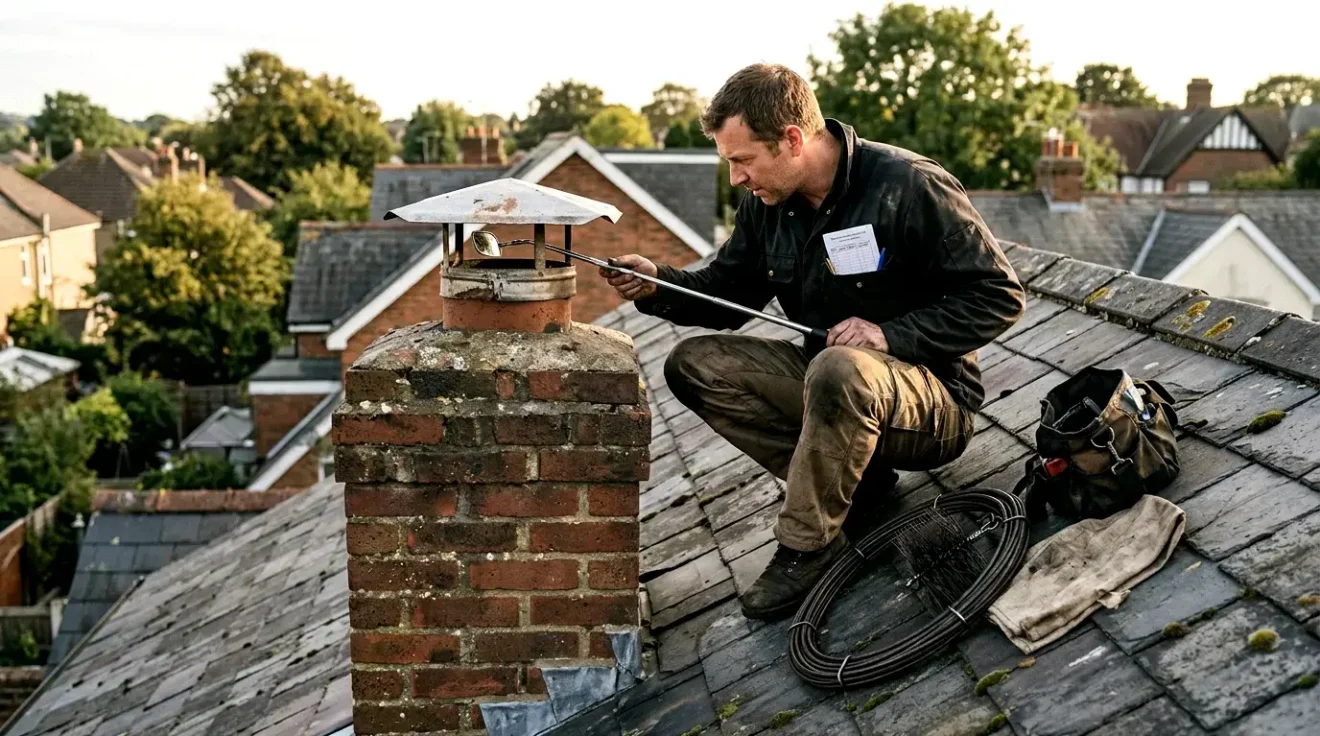
A practical booking strategy is to arrange the next appointment when the current heating season ends. Ask the contractor about spring or summer availability, whether an additional pre-season check is warranted and how seasonal usage should affect the schedule.
For example, a household that burns wood every evening during winter might schedule maintenance before regular use resumes and arrange a further visit after the busiest heating period. That is an illustrative planning approach, not a universally sufficient interval.
If the chimney has been idle for several months, do not assume an earlier cleaning guarantees that it remains unobstructed. New bird activity, unusual odours or visible debris justify investigation before the first fire.
Even a well-timed appointment may reveal a particularly stubborn type of deposit, making it important to recognise the difference between ordinary soot and glazed creosote.
How to Recognise Glazed Creosote Deposits Inside an Accessible Fireplace Area?
Glazed creosote typically appears as a hard, dark, shiny coating resembling tar or hardened varnish. Unlike ordinary soot, which is often dull and powdery or flaky, glaze can adhere strongly to fireplace and flue surfaces. Visible deposits should prompt professional assessment because their appearance alone cannot establish how extensively the chimney is affected.
Use a torch to examine accessible, fully cooled firebox surfaces and the visible damper area. Glazed deposits may reflect the light and appear smooth, lumpy or glossy. Ordinary soot generally has a more matte appearance and may look loose or granular.
Where a surface is safely reachable without dismantling components or reaching into the flue, a gloved fingertip may help distinguish loose powder from a hard coating. However, do not scrape, chip or chemically treat suspected glaze yourself. Material may detach unpredictably, and aggressive cleaning can damage components or expose concealed defects.
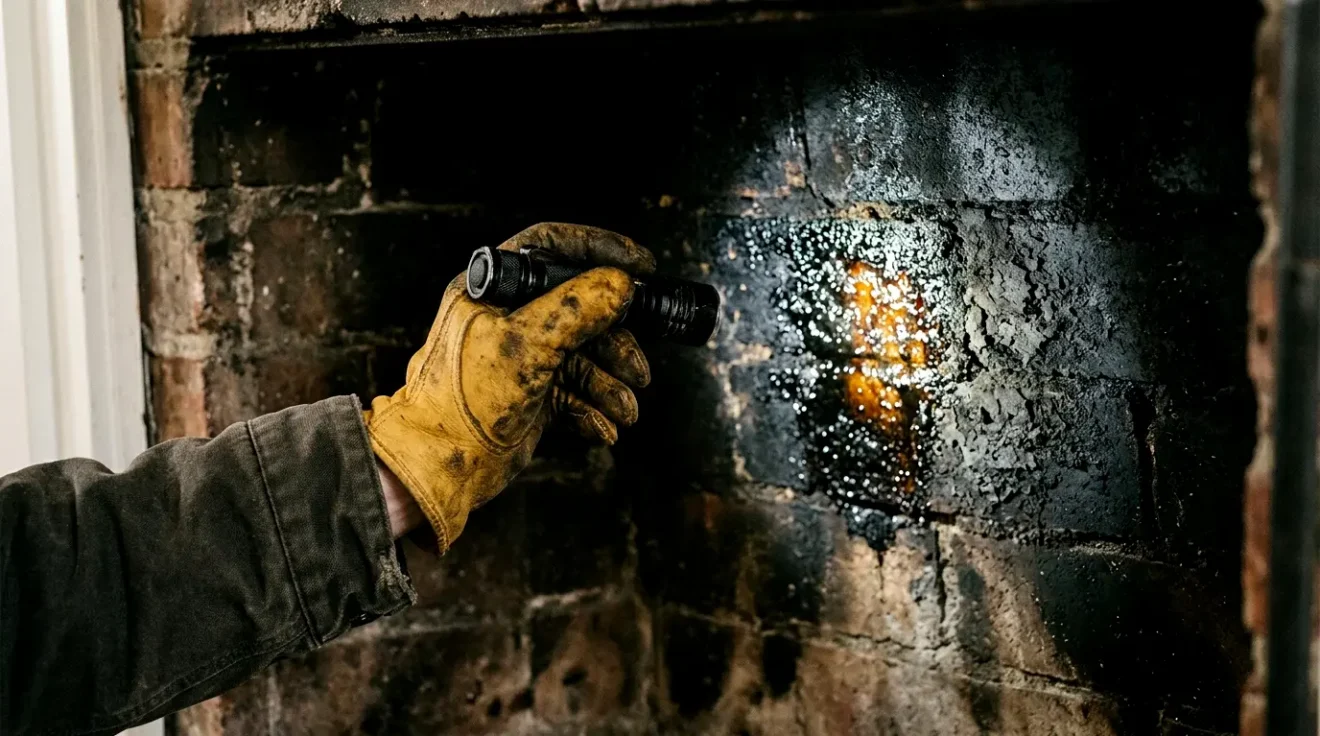
Glaze can develop when smoke constituents condense repeatedly and deposits become sticky, dense and hardened. Wet firewood, insufficient combustion air, low flue temperatures and prolonged smouldering can contribute to these conditions. Severe deposits are commonly described as third-stage or stage-3 creosote, although visual identification is not a substitute for professional assessment.
Compared with loose soot, hardened creosote can be much more difficult to remove with conventional brushing. A qualified sweep may assess specialised mechanical methods or appropriate treatments, depending on the deposit and chimney construction. Not every coating can be safely or completely removed by the same technique, and chemical products should never be treated as a substitute for professional cleaning.
Because creosote is combustible, suspicious deposits should be evaluated before further fireplace use rather than tested by lighting a hotter fire.
Prevention begins with appropriate fuel and combustion conditions. The EPA Best Wood-Burning Practices guidance recommends wood with a moisture content below 20 %, checked using a moisture meter, and discourages smouldering combustion. This guidance is retained on the EPA‘s historical Burn Wise website, whose programme ended in 2025.
Measure moisture on a freshly exposed face of split firewood, following the meter’s instructions. Maintain the air supply specified by the appliance manufacturer and avoid prolonged, deliberately smoky fires. These practices help reduce deposit formation but do not replace sweeping.
A particularly important distinction is whether poor fireplace performance comes from deposits or from a physical obstruction that appeared while the chimney was unused.
Why Bird Nests and Debris Can Cause Sudden Fireplace Draft Problems
Bird nests, fallen leaves and loose masonry can cause sudden fireplace draught problems by narrowing or obstructing the flue. When combustion gases cannot escape freely, smoke may spill back into the room and dangerous gases can accumulate indoors. A chimney that worked normally last winter can therefore become unsafe before the next heating season, even without heavy creosote buildup.
Warm smoke normally rises through the chimney because of temperature and pressure differences. A nest or debris accumulation restricts that path, increasing resistance and interfering with the expected flow. A partial obstruction may not stop all smoke movement, making the problem less obvious until conditions change.
Possible warning signs include:
- Smoke spilling into the room when lighting the first fire after a long break.
- Unusually weak or inconsistent draught.
- Scratching sounds or repeated bird activity around the chimney.
- Persistent chimney odours, particularly after periods of non-use.
- Twigs, leaves or loose masonry appearing in the fireplace or accessible flue opening.
These signs do not prove that a nest is present. Wind-driven downdraught, a cold chimney, nearby buildings or negative pressure from powerful extractor fans can also interfere with smoke evacuation. An airtight home may need an appropriately designed combustion-air supply, but the correct solution depends on the appliance and property.
| Observed pattern | Possible explanation | Appropriate next step |
|---|---|---|
| New smoke problem after months without use, with bird activity | Nest or debris obstruction | Stop use and arrange a flue inspection. |
| Smoke problems mainly during certain wind conditions | Wind-related downdraught | Request a professional assessment of chimney termination and airflow. |
| Draught deteriorates when extractor fans operate | Negative indoor pressure | Have ventilation and combustion-air requirements evaluated. |
Nesting often occurs during periods when fireplaces are unused. In some jurisdictions, birds and active nests receive legal protection, meaning removal may be restricted or require specialist authorisation. Check the rules applicable to the species and property before arranging removal.
A suitable, professionally selected chimney cap or bird guard may reduce future entry, provided it does not interfere with safe venting and meets the relevant appliance requirements.
An old nest is also a potential fire hazard. Combustible nesting material may remain lodged in the chimney despite apparently adequate draught. Suspected nesting should therefore trigger inspection and appropriate clearance, not merely removal of visible twigs from the hearth.
Once the flue has been checked for obstructions, homeowners can complete a separate visual assessment of the fireplace itself before returning it to service.
Key takeaways before your first fire
- Confirm that the chimney has been professionally maintained and that no unresolved restrictions on use remain.
- Look for evidence of damage at the fireplace opening without attempting to inspect concealed flue sections yourself.
- Treat unusual smoke movement, damaged masonry or uncertain damper operation as reasons to seek professional assessment.
How to Inspect a Fireplace Firebox for Damage Before Using It?
Inspect a fireplace firebox before use by checking its accessible firebricks, mortar joints, grate, damper and surrounding surfaces for visible deterioration. Work only when the fireplace is completely cool and use a torch to examine areas that can be reached safely. Homeowner checks can reveal warning signs, but they cannot establish the condition of hidden chimney components.
Begin with the firebox walls and floor. Look for cracked, loose or missing firebricks and for mortar joints that appear open, crumbling or displaced. Firebricks help shield surrounding construction from direct heat, so substantial deterioration should be assessed before another fire is lit.
A fine surface mark is not automatically evidence of dangerous failure. However, separated bricks, large cracks, displaced masonry or visible openings behind the lining can indicate defects requiring professional attention. Avoid assuming that ordinary household mortar is suitable for fireplace repairs.
Next, examine the grate and damper. A corroded or warped grate may no longer support fuel correctly. A damper that is stuck, distorted or unable to reach its intended operating position can interfere with safe operation. Air leakage through a closed damper may also contribute to heat loss, cold draughts and odours, although the expected sealing behaviour varies by fireplace design.
With the damper fully open, shine a torch upwards from a safe position to look for accessible debris, obvious heavy deposits or displaced components. Do not reach into the smoke chamber or attempt to dismantle the damper assembly. Where accessible, gently checking whether a firebrick moves may reveal looseness, but tapping sounds alone cannot reliably diagnose hidden damage.
Also note unusual soot staining outside the normal combustion area, particularly around joints or adjacent surfaces. Such staining may indicate previous smoke leakage and deserves professional investigation.
Homeowners can document visible concerns with photographs and maintenance notes, but the internal flue, chimney crown, upper masonry and concealed connections belong within a qualified professional’s inspection.
Keep the fireplace unused if a defect could affect containment, draught or heat protection. An apparently minor problem should not be repaired experimentally before its significance is understood.
Before the next fire, record any visible defects, check your latest sweeping documentation and arrange professional assessment whenever the condition of the fireplace or flue remains uncertain. A safe routine depends on both regular cleaning and verified appliance condition.
Does a chimney need sweeping if the fireplace has not been used for a year?
A long period without use does not guarantee that the chimney remains clear or structurally sound. Birds, debris, moisture and deteriorating components may create problems independently of soot accumulation. Arrange an appropriate professional check before restarting an unused fireplace, and follow any applicable maintenance requirements.
Does a stainless-steel chimney liner eliminate the need for sweeping?
No. Lined chimneys can still accumulate combustion deposits and debris. The liner’s material, condition and installation determine how it should be inspected and cleaned. A professional sweep should use methods compatible with the specific liner and appliance manufacturer’s instructions.
Can chimney sweeping logs replace a professional chimney sweep?
No. A chemical chimney-cleaning product cannot verify flue integrity, identify every obstruction or replace an appropriate professional inspection. Do not rely on cleaning logs to make a chimney with heavy deposits, poor draught or suspected damage safe to operate.
Should you keep a chimney sweeping certificate for insurance purposes?
Yes. Retain sweeping certificates, inspection reports and relevant repair invoices as part of the property’s maintenance history. Your insurer may specify servicing conditions or require particular documentation. A sweeping certificate demonstrates recorded maintenance within its stated scope, not a guarantee that every chimney component is free from defects.
What should you do if a carbon monoxide alarm sounds near a wood-burning fireplace?
Treat the alarm as a potential emergency. Stop using the appliance if this can be done safely, move everyone into fresh air and contact the appropriate emergency service or gas and fire-safety authority for your location. Do not re-enter an unsafe area or restart the fireplace until competent professionals have investigated and confirmed that it is safe.