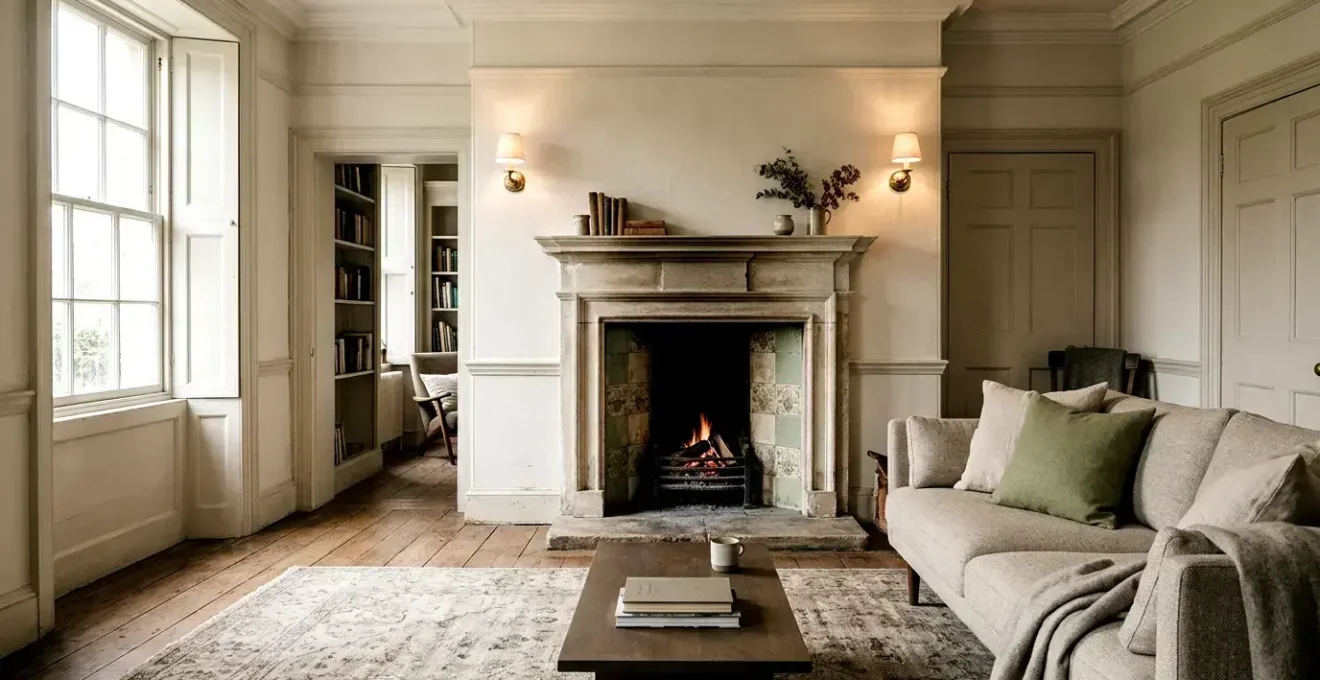
A classic fireplace can give a living room a sense of permanence that contemporary furniture alone rarely achieves. Its moulded surround, substantial hearth and familiar proportions connect the space to the home’s architectural character. Yet preserving that atmosphere does not mean recreating an entirely traditional interior.
The most convincing approach is to retain the fireplace’s architectural identity while simplifying what surrounds it. A comfortable modern sofa, understated mantel accessories, carefully chosen colours and warm layered lighting can make a period fireplace feel entirely at home in everyday life.
The distinction matters particularly in cottages, Victorian terraces, Georgian houses and older country homes, where an original fireplace may contribute significantly to the character of the property. Removing traditional features simply to achieve a contemporary appearance can diminish the room’s individuality.
Instead, consider which details deserve attention, which decorative choices can become quieter, and how modern furnishings can complement the fireplace without imitating its period style.
Creating a timeless classic fireplace atmosphere
- Preserve the fireplace’s proportions and significant original features while introducing modern comfort through furniture and textiles.
- Style the mantel sparingly, coordinate materials rather than entire decorative periods, and use warm indirect lighting.
- Choose reversible, low-impact decorative changes before repainting, removing or structurally altering historic fireplace elements.
- Why Do Traditional Fireplace Shapes Make a Living Room Feel More Established?
- How to Style a Traditional Mantel Without Excessive Ornamentation?
- Painted Mantel or Natural Wood for a Timeless Cottage Living Room?
- Why Overly Mixed Period Details Can Make a Classic Fireplace Look Inconsistent
- How to Use Wall Lights to Create a Softer Atmosphere Around a Period Fireplace?
- Mantelpiece or Clean-Edged Surround for a Period Home With Modern Furniture?
- How to Repeat Fireplace Colours in Soft Furnishings Without Making the Room Look Dated?
- How to Match a Fireplace With Your Home Interior Without Creating a Style Clash?
Why Do Traditional Fireplace Shapes Make a Living Room Feel More Established?
Traditional fireplace shapes make a living room feel more established because their balanced proportions, defined mantel lines and substantial hearths create a recognisable architectural centre. Rather than relying on decorative objects to establish character, the fireplace provides a permanent visual anchor. Its effect is strongest when its proportions and materials relate naturally to the surrounding room.
A traditional fireplace often establishes a clear visual hierarchy. The horizontal lintel or mantel line defines its upper boundary, the surround frames the opening, and the hearth gives the composition a grounded base. Together, these elements encourage the eye to settle on one architectural feature.
Symmetry can reinforce that impression, especially when the chimney breast is centred between two alcoves. However, perfect symmetry is not necessary. An uneven cottage fireplace can feel equally rooted in the building when its scale and materials belong to the room.
Established does not mean dated. A carved timber surround may appear heavy beside patterned wallpaper, ornate curtains and antique furniture, yet feel distinctive against softly painted walls and a contemporary linen sofa.
A practical harmony test is to identify whether the fireplace shares a colour or material with another permanent feature. Stone hearths might connect with stone flooring, while a painted mantel could complement the skirting boards or interior doors. This is a styling test, not a fixed architectural rule.
The National Park Service’s guidance on historic interior features recommends evaluating significant architectural details alongside room proportions, ceiling heights, finishes and relationships between spaces. This conservation perspective is particularly useful when deciding how much of an original fireplace to retain.
Replacing a traditional surround with a flat minimalist opening may create a cleaner appearance, but it can also remove the architectural feature that distinguished the room. Where the original design is intact, updating the furnishings first is often the more measured choice.
Once the fireplace’s shape feels integrated with the room, attention can move to the mantel itself, where a lighter decorative approach often creates the clearest sense of modernisation.
How to Style a Traditional Mantel Without Excessive Ornamentation?
A traditional mantel looks more timeless when its architectural detail remains visible rather than competing with numerous ornaments. Choose one dominant decorative element, introduce a contrasting texture and finish with a single natural accent. Keep generous portions of the surface empty so that the mantel reads as part of the fireplace rather than an overcrowded display shelf.
For a straightforward arrangement, begin with one object that gives the composition height or scale. A contemporary ceramic vase, restrained framed artwork or simple mirror can establish the main focus without repeating the fireplace’s elaborate detailing.
Then introduce a second material or texture, such as matte pottery, aged wood or lightly textured glass. A small branch arrangement or seasonal flowers can bring movement and softness without adding another strong decorative theme.
As an initial styling experiment, aim to occupy roughly one third of the available mantel surface. This is a flexible visual guideline, not a measured design standard. A narrow mantel may need only one or two objects, while a generous stone shelf can accommodate a more developed arrangement.
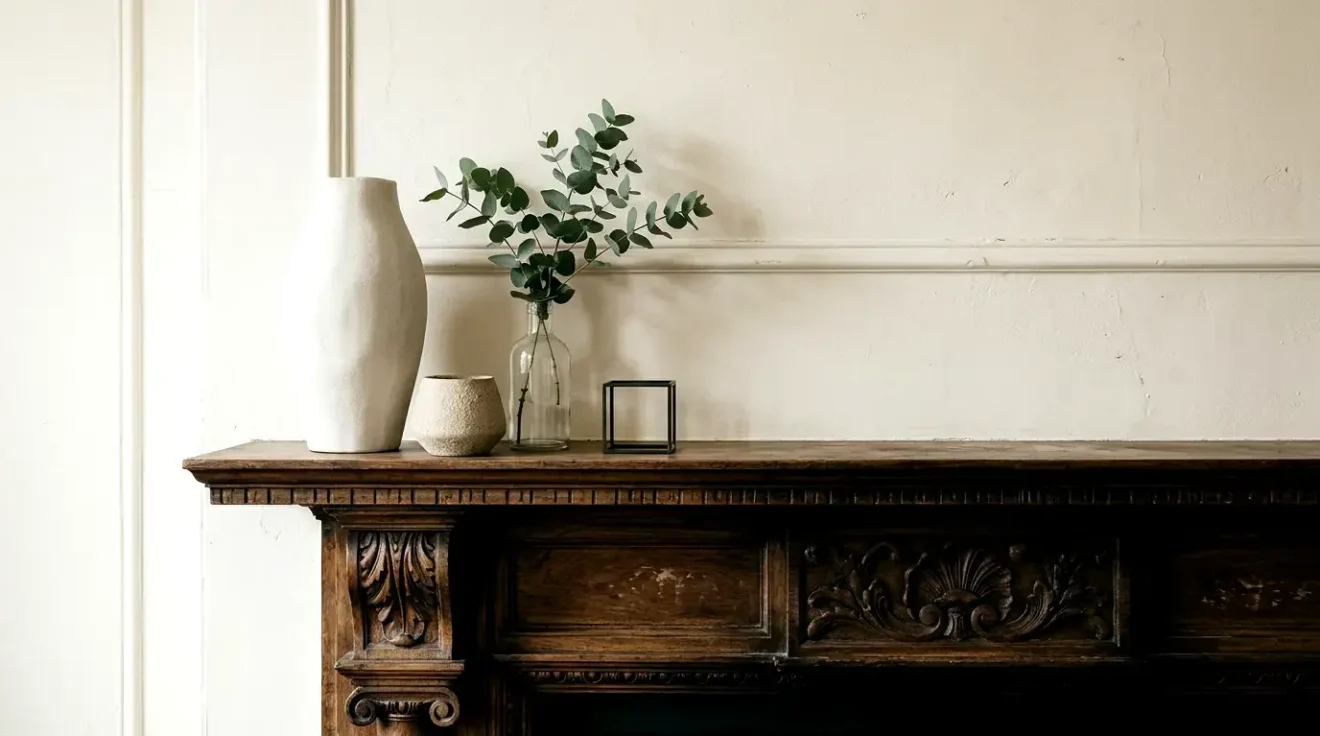
The most effective contrast is often between a detailed surround and objects with simple silhouettes. A smooth vase positioned against carved timber makes the original mouldings easier to appreciate. Several elaborate clocks, gilded frames and ornamental figurines, by comparison, can create multiple competing points of interest.
Visual breathing room is equally important. Leave some empty space between objects and avoid filling every corner of the shelf. If the fireplace has delicate carvings, keep accessories away from the most distinctive details.
Object safety also matters. Candles, dried foliage, hanging textiles and other combustible decorations should be kept away from heat, flames and appliance clearances. Avoid placing heavy objects on unstable historic fittings or fixing mirrors into original masonry or timber without appropriate assessment.
With the decorative arrangement simplified, the next decision is more fundamental: whether the mantel’s existing finish supports the room or makes the fireplace feel unnecessarily heavy.
Painted Mantel or Natural Wood for a Timeless Cottage Living Room?
A painted mantel can make a small cottage living room feel lighter and more cohesive, while natural wood preserves warmth, grain and material character. The better choice depends on the timber’s existing colour, the amount of daylight and the surrounding furnishings. Where original historic woodwork survives, preservation should take priority over a purely decorative preference.
A dark oak mantel can look beautiful in a bright room with pale walls and substantial furniture. In a compact cottage with limited daylight, the same heavy timber surround may dominate the visual composition, particularly when accompanied by dark floors and upholstery.
Painting offers a way to soften the fireplace’s appearance without changing its silhouette. Cream, warm grey and muted sage green can help traditional mouldings relate to contemporary walls and fabrics. Natural timber, meanwhile, may provide enough texture to prevent an otherwise neutral room from becoming flat.
Consider these three criteria before choosing a finish:
| Design criterion | Painted mantel | Natural wood mantel |
|---|---|---|
| Existing timber colour | Can visually soften a very dark, bulky surround. | Works well when the grain and existing finish are attractive. |
| Natural daylight | Light colours may help a dim room feel less visually heavy. | Often creates appealing contrast in brighter rooms. |
| Upholstery and textiles | Can connect with cream, grey or muted-colour fabrics. | Complements linen, wool, leather and other textured materials. |
For example, a hypothetical cottage with a dark stained mantel, north-facing windows and a pale linen sofa might benefit visually from a muted painted finish. Another cottage with honey-coloured timber, generous daylight and cream upholstery may feel more welcoming with the wood left exposed.
There is an important distinction between repainting an ordinary modern surround and altering historically significant joinery. Paint removal, sanding, oils and lime-based finishes are not necessarily reversible. Some treatments penetrate timber, change its surface or damage earlier finishes.
Before working on original wood, investigate its condition and significance. More readily reversible options include changing the wall colour, adding a freestanding screen where appropriate, updating nearby furnishings or testing a painted finish on a separate non-historic accessory.
Try a photographic comparison before making a permanent change. Photograph the fireplace in daylight, create digital versions with a painted finish and exposed timber, and compare them beside the actual furniture and flooring. The most coherent option should make the fireplace appear integrated into the room rather than resemble a separate piece of period furniture.
Whatever finish is chosen, the surrounding decorative details should support a consistent composition. A harmonious colour palette alone cannot always compensate for too many competing period references.
Why Overly Mixed Period Details Can Make a Classic Fireplace Look Inconsistent
Mixing period details can make a classic fireplace look inconsistent when several decorative features compete for attention without a shared visual connection. Victorian tiles, a Georgian-style mantel and Art Deco accessories can coexist, but their colours, proportions or materials need a deliberate relationship. The problem is not historical variety itself; it is a composition without a clear focal hierarchy.
A fireplace built around one strongly patterned feature generally benefits from quieter supporting elements. When decorative tiles, carved mouldings, elaborate metalwork and ornamental accessories all demand equal attention, the eye moves between several competing focal points.
For example, imagine a Georgian-inspired mantel framing colourful Victorian-style tiles, accompanied by a highly geometric Art Deco mirror. Each element may be appealing individually, yet together they can create a sense of visual fragmentation if their shapes and finishes have little in common.
The simplest solution is to identify one primary character-defining feature and let the remaining elements support it.
- If the original tiles are particularly distinctive, choose simple mantel accessories that allow their pattern to lead.
- If the carved surround is the strongest feature, use quieter colours and less elaborate objects nearby.
- If the cast-iron insert provides the main historic character, repeat its dark finish subtly rather than adding several competing metallic colours.
However, stylistic difference should never be confused automatically with historical inaccuracy. Historic fireplaces have often been modified during successive periods, and some later alterations have become significant in their own right.
Historic England’s advice on changing a fireplace explains the importance of original chimneypieces and the consequences of alteration or removal. It also recognises that fireplaces may have changed as tastes evolved.
“Quite often the chimneypiece is one of the original fittings and a deliberate visual focus.”
Rather than removing later features simply because they belong to different eras, assess their significance first. In a historically unprotected modern reproduction, decorative adjustments may be straightforward. In a genuinely old fireplace, preservation advice may be appropriate before altering tiles, ironwork or mouldings.
Deliberate layering can also work beautifully. A traditional timber mantel and an Art Deco-style mirror may feel coordinated when both share a warm bronze tone. What matters is a recognisable connection that gives the eye a consistent path through the composition.
Once those relationships are clarified, lighting becomes a particularly useful tool: it can emphasise the fireplace’s texture and depth without introducing more decorative objects.
How to Use Wall Lights to Create a Softer Atmosphere Around a Period Fireplace?
Wall lights soften the atmosphere around a period fireplace by adding warm, localised illumination that gently reveals its mouldings, textures and architectural depth. A pair of carefully positioned sconces can make the fireplace feel welcoming even when it is unlit. Diffused light and suitable brightness are generally more useful for this effect than intense overhead spotlighting.
Traditional fireplace surrounds often have projecting cornices, recessed panels and textured stone or timber. Gentle light from the sides can create subtle shadows that make these details more visible, whereas a strong centrally directed light may flatten the composition or produce harsh contrasts.
A practical starting arrangement is to position wall lights on either side of the chimney breast, approximately level with the mantel or slightly above it, depending on the wall height and fixture design.
Choose fittings that direct or diffuse light towards the architectural surfaces rather than shining directly into seated occupants’ eyes. Check the actual beam direction before installation, especially when a television, mirror or reflective finish sits above the mantel.
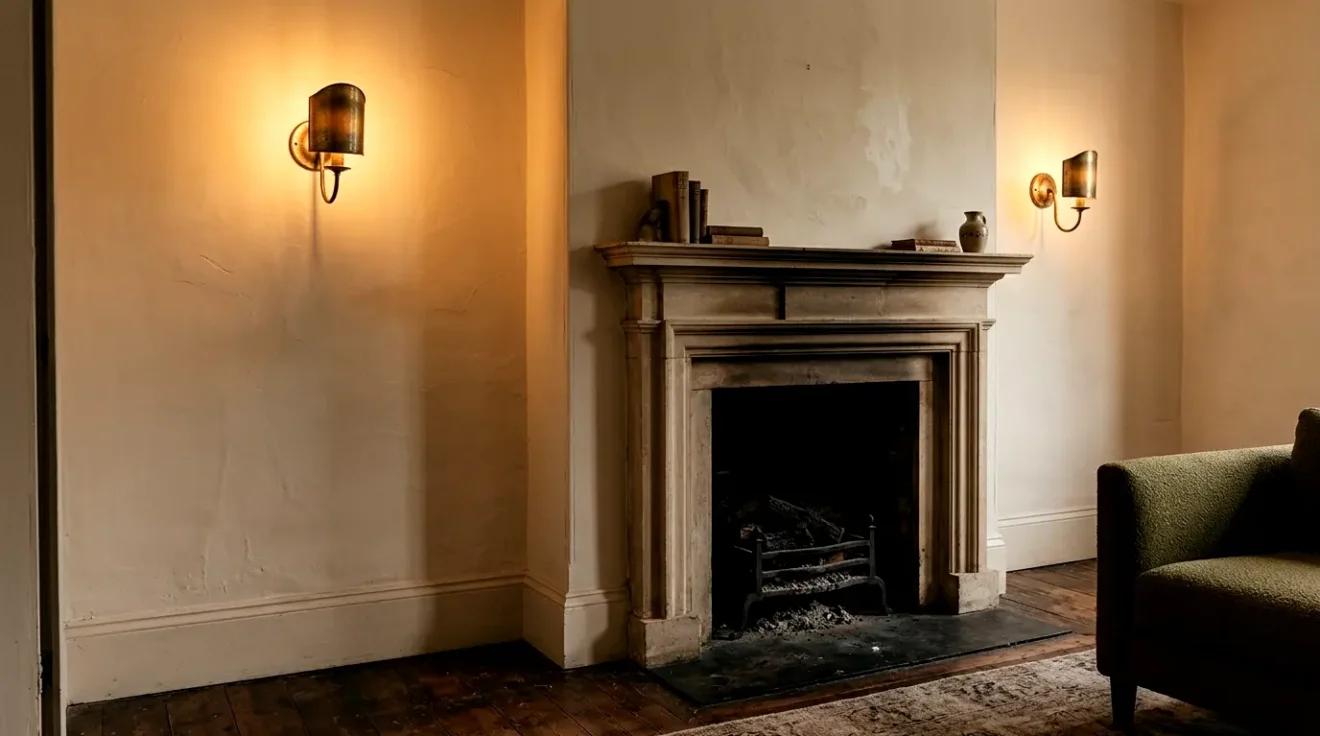
For a relaxed living-room atmosphere, a warm white LED bulb is a useful starting point. Energy Saving Trust’s advice on choosing home lighting describes warm white light between 2700 and 3000 K as suitable for general domestic use, with approximately 2700 K offering a particularly warm appearance.
2700–3000 K
The warm white LED colour-temperature range recommended by Energy Saving Trust for general household lighting. The ideal result also depends on brightness, fixture design and personal preference.
Energy Saving Trust, Energy saving light bulbs and lighting
Wall-light finishes can also connect traditional architecture with modern decoration. Antique brass offers warmth and subtle patina, opal glass provides a softer glow, and a clean-lined contemporary sconce can introduce simplicity without obscuring the fireplace’s period character.
Consider dimmable lighting where the bulbs, drivers and controls are compatible. This allows brighter illumination when the living room is in regular use and a gentler setting for quiet evenings.
Recessed ceiling spotlights are not inherently unsuitable, but harsh beams aimed directly at the mantel can make an older fireplace feel more like a display exhibit than part of a comfortable room. Layering sconces with table or floor lamps usually provides greater flexibility.
Electrical work around an older chimney breast requires care. Existing flues, heat exposure, wiring routes and historic plaster may limit suitable fixture positions. A qualified electrician should assess installation requirements, particularly where original architectural fabric may be affected.
Lighting can establish the right mood, but the fireplace’s overall silhouette still needs to sit comfortably beside contemporary furniture. That brings the choice of mantel profile into focus.
Mantelpiece or Clean-Edged Surround for a Period Home With Modern Furniture?
A traditional mantelpiece gives a period living room decorative structure and a natural display surface, while a clean-edged surround creates a quieter architectural frame around the fire. With modern furniture, either can work when its visual weight suits the room. Preserving an original mantel and simplifying nearby decoration is often preferable to removing historic material for a minimalist effect.
The decision should begin with the furniture already present. A room containing a substantial contemporary sofa, low-profile armchairs and a simple coffee table may benefit from a restrained fireplace profile that does not compete with their shapes.
However, if the room combines modern seating with traditional joinery, panelled doors or decorative cornices, a classic mantel can provide continuity between the architecture and the furniture.
There are three broad approaches:
- Retain the traditional mantel: particularly suitable where original mouldings, proportions and materials contribute to the character of the room.
- Use a clean-edged surround: often appropriate for a new installation or an existing modern replacement in a room dominated by simple contemporary forms.
- Create a restrained transition: preserve the existing historic structure while simplifying accessories, nearby wall finishes and other non-historic decorative elements.
The third approach is frequently the most adaptable. For example, a traditional marble mantel with decorative detailing may look entirely contemporary beside an understated sofa and a large plain rug. The architectural feature remains unchanged; its context becomes calmer.
Where a mantel is a later, non-significant addition, a simpler replacement may be reasonable after checking the condition and construction of the fireplace. Yet physically removing corbels, cutting down cornices or flattening original profiles should not be treated as harmless cosmetic work.
In older homes, removal can damage surrounding plaster, masonry, timber and other historic finishes. In England, alterations affecting the character of a listed building may require listed building consent. Requirements elsewhere, including Scotland, Wales, Northern Ireland, the United States, Canada and Australia, depend on local heritage protections and regulations.
Before a permanent change, establish whether the fireplace components are original, later but historically significant, or modern reproductions. If the chimney breast or structural elements are involved, obtain appropriate professional advice.
A clean-edged appearance does not require a stripped-back historic interior. Often, leaving the mantel intact and editing what sits around it achieves the same visual calm with substantially less intervention.
Once the fireplace’s form is settled, soft furnishings offer a more flexible way to establish continuity, particularly when a traditional colour or material needs to connect with modern seating.
How to Repeat Fireplace Colours in Soft Furnishings Without Making the Room Look Dated?
Fireplace colours can be repeated in soft furnishings without making a living room look dated by using small, selective echoes rather than fully matched sets. One cushion, a throw or a subtle curtain detail can connect the hearth to the seating area. Slightly varied shades often create a more relaxed contemporary effect than exact colour matching.
The purpose is visual continuity rather than uniformity. A traditional fireplace may contain dark green tiles, warm terracotta brick, cream stone or black cast iron. Each colour provides an opportunity to create a subtle relationship with the room’s textiles.
For instance, deep green fireplace tiles might be echoed in a muted sage cushion, while warm red brick could be complemented by a faded rust-coloured throw. These are related tones rather than identical copies.
As a practical starting point, try keeping the fireplace’s repeated colour to approximately one tenth of the visible textile area. This is an informal styling proportion, not a universal formula. The aim is to create a visible connection without allowing the accent colour to dominate.
There is a difference between repeating a colour and building an entire coordinated scheme around it. Matching curtains, cushions, rugs and upholstery in the same strong shade can feel overly controlled, particularly when combined with elaborate traditional patterns.
A more flexible approach is to select different textures that share a colour family. A green wool throw, cream linen cushions and a muted patterned rug can complement an old tiled hearth without appearing to belong to a matched furniture collection.
A five-step fireplace and textile coordination checklist
- Photograph the fireplace in natural daylight and save one clear reference image showing its principal colours.
- Identify the main fireplace colour and record one lighter or softer related shade as a potential textile accent.
- Choose one or two small furnishings that carry the accent colour and prepare a simple shopping or styling shortlist.
- Place the selected textiles beside the existing sofa and rug, then photograph the arrangement from the room’s entrance.
- Compare the before-and-after photographs and keep only the accents that create a visible connection without overwhelming the furniture.
Consider the balance of surfaces as well as colour. A textured wool cushion can echo the warmth of aged brick, while an understated linen throw may soften a highly polished stone surround.
Seasonal adjustments are also useful. Replacing a single cushion or throw is more practical than redesigning the entire room when its colour scheme begins to feel too coordinated.
When the colours feel connected, the final challenge is to bring all the materials, shapes and furniture arrangements into one coherent living-room composition.
Key takeaways before bringing the whole room together
- Judge the fireplace as part of the room’s architecture, not as an isolated decorative feature that must match every piece of furniture.
- Look for shared materials, related colours or complementary lines before considering permanent alterations.
- Use movable furnishings and lighting to resolve visual tension before changing an original fireplace surround.
How to Match a Fireplace With Your Home Interior Without Creating a Style Clash?
To match a fireplace with a modern home interior, look for shared materials, compatible colours and balanced shapes rather than trying to make every feature belong to the same historical style. A traditional fireplace can sit comfortably beside contemporary furniture when the room contains a few deliberate visual connections. Start with movable furnishings before considering permanent changes.
The most useful approach is to evaluate what the fireplace and the rest of the living room already have in common. A stone surround might connect with a travertine coffee table, while the dark finish of a cast-iron insert could relate to the legs of a modern armchair.
Wood also offers a natural bridge. A traditional oak mantel does not need to match every timber surface exactly, but it can feel more integrated when a coffee table, picture frame or nearby piece of furniture has a compatible undertone.
Begin with a simple three-question diagnostic:
- Colour: Does the fireplace share a colour or related shade with another element in the living room?
- Material: Is there a visible relationship between the fireplace’s stone, timber, metal or tile and the room’s other finishes?
- Shape: Do the fireplace’s straight or curved lines have a complementary relationship with the furniture and architectural details?
If the answer is yes to at least one question, there is already a visual connection to develop. If all three answers are no, the fireplace may feel isolated, but this is a cue to experiment rather than proof that the interior is incompatible.
Furniture placement can create an effective transition. A neutral rug between a traditional hearth and a contemporary sofa establishes a softer visual boundary, while a low timber coffee table can connect an ornate mantel with modern upholstery.
An armchair positioned near the fireplace may also help integrate the hearth into daily life. Rather than treating it as a decorative backdrop, the arrangement makes it part of a comfortable seating area. Keep furniture, rugs and other combustible materials outside the clearances required for the particular fireplace or appliance.
Consider a hypothetical living room with a white marble fireplace, a charcoal-grey sofa and a black metal coffee table. The marble’s pale surface can connect with a cream wool rug, while the darker fireplace opening relates to the coffee table. A small textured cushion can soften the contrast without introducing a new decorative theme.
The result depends on a few purposeful relationships, not an exact match between historic and contemporary furniture.
This approach also offers a sensible order of investment. Try rearranging furniture, changing accessories, adjusting lighting and introducing related textile colours first. Only consider refinishing or replacing fireplace components when those lower-impact measures cannot resolve a genuine design or functional problem.
For a fireplace with potential heritage significance, establish what should be preserved before commissioning alterations. A successful modernisation should support both the home’s everyday use and the continuity of its architectural character.
Start with one photograph of the entire living room, taken from the main entrance. Identify a single colour, material or furniture adjustment that would connect the hearth to the rest of the space. Make that change first, then reassess the room before considering anything more permanent. A timeless fireplace atmosphere comes from preserving what gives the home character while allowing contemporary comfort to settle naturally around it.
Can a classic fireplace work with a very minimalist living room?
Yes. A traditional fireplace can provide contrast and architectural character in a minimalist room. Keep the surrounding furniture simple, limit decorative accessories and use a restrained palette. A detailed mantel often becomes more visually effective when the rest of the interior is quiet.
Should an unused fireplace be decorated or left empty?
An unused fireplace can remain visually attractive without being filled with objects. Its original grate, tiles and opening may already provide enough character. If decorative logs, a screen or other accessories are considered, first confirm that the fireplace is permanently out of use or that the arrangement is safe for its actual operating condition. Do not obstruct required ventilation.
Is it possible to modernise a fireplace without painting or replacing it?
Yes. Changing the wall colour, simplifying mantel accessories, introducing contemporary furniture and improving ambient lighting can significantly alter how a fireplace feels. These changes are generally less invasive than refinishing or removing historic materials, and many can be reversed when decorative preferences change.
What should homeowners check before altering an original fireplace?
First establish which features are original or historically significant, whether previous alterations have heritage value, and whether the proposed work affects the fireplace’s structure or safe operation. Check applicable local heritage permissions and building requirements. Where the fireplace is historically important, consult a suitably qualified conservation professional before undertaking irreversible work.
Can an electric fireplace preserve a traditional atmosphere?
An electric fireplace can contribute to a traditional atmosphere when its dimensions, visible finish and installation complement the surrounding architecture. The visual result depends on the appliance and its integration into the room. In a historic fireplace, any installation should avoid unnecessary damage to significant original fabric and comply with the manufacturer’s safety requirements.