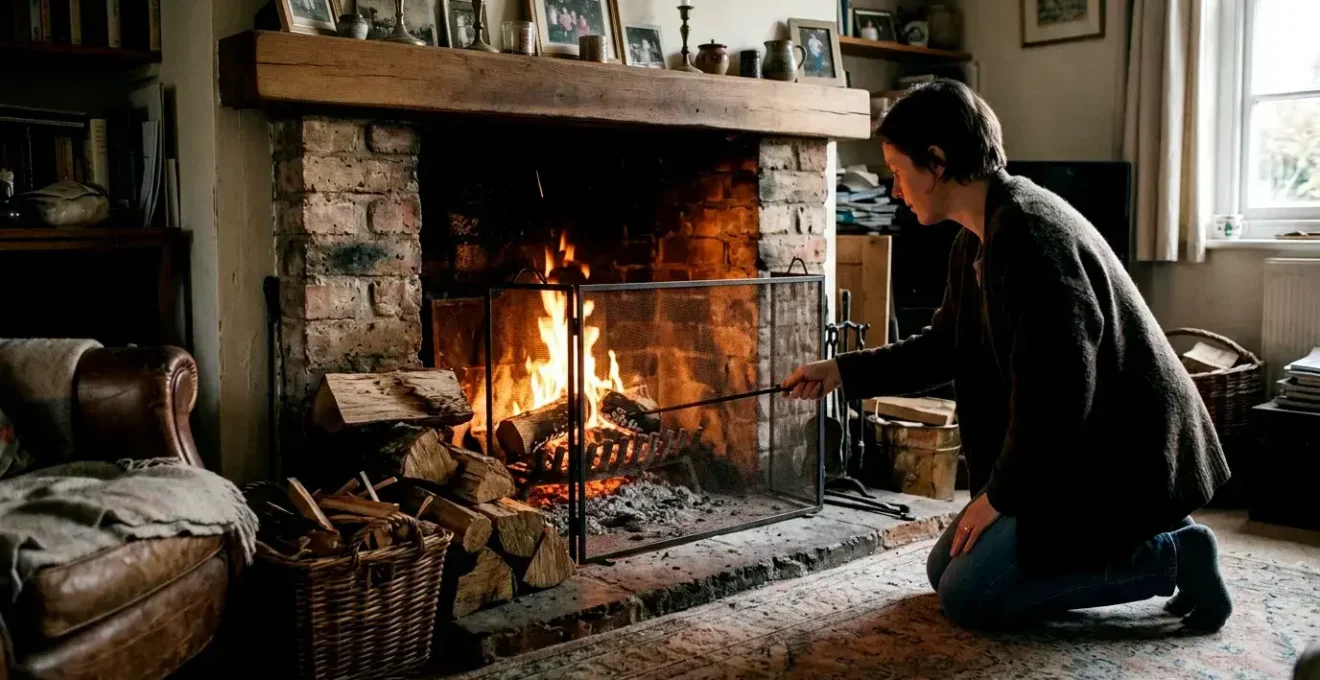
A wood-burning fireplace can offer something that many modern heating systems cannot reproduce: the movement of real flames, the sound of burning logs and the familiar ritual of tending a fire. For homeowners who value atmosphere and traditional interiors, that experience can make a fireplace an appealing feature. However, enjoying an authentic fire and heating a home efficiently are two different objectives.
An open fireplace requires suitable firewood, a functioning chimney, regular professional maintenance and careful operating habits. It can also draw heated indoor air into the chimney rather than delivering substantial warmth to the room. A closed wood stove or fireplace insert changes that balance by retaining more useful heat while restricting the direct experience of an open fire.
The right choice therefore depends on the home’s existing chimney, the intended heating role, the time available for maintenance and the willingness to manage smoke, fuel storage and fire safety. Understanding the entire installation, rather than judging the fireplace by its appearance alone, makes it easier to decide whether traditional wood burning is a practical long-term choice.
Wood-Burning Fireplaces: The Essentials
- Experience versus efficiency: An open fireplace offers an authentic flame but is generally an inefficient way to heat a room. A closed stove or suitable insert is more practical for useful supplemental heating.
- Fuel and maintenance matter: Dry, untreated firewood, a sound chimney and regular professional sweeping are essential to responsible operation.
- Household suitability: A wood fireplace requires space for fuel, attention during operation, safe ash disposal and an appropriate installation. Its appeal must justify these ongoing responsibilities.
- What Makes a Wood-Burning Fireplace System Safe and Effective in a Modern Home?
- Open Fireplace or Closed Wood Stove for a Traditional Living Room?
- Why Does Damp Firewood Produce More Smoke and Less Useful Heat?
- How to Light a Wood-Burning Fireplace With Less Smoke at Start-Up?
- Why Does Smoke Enter the Room When You Add Logs to a Wood Fire?
- Why Burning Painted Timber or Household Waste Can Make Fireplace Smoke More Toxic
- When Should You Prepare Firewood and Fireplace Equipment for Winter?
- When Is the Best Time to Schedule Chimney Sweeping Before Winter?
What Makes a Wood-Burning Fireplace System Safe and Effective in a Modern Home?
A safe and effective wood-burning fireplace depends on the performance of the entire installation, not simply the condition of the firebox. The chimney, flue, damper, combustion-air supply, hearth and surrounding clearances must work together. A fireplace can appear structurally sound yet produce poor heat, excessive smoke or unreliable draft if one part of this system is unsuitable.
The distinction between safety and heating performance is particularly important. Safety concerns include maintaining appropriate distances from combustible materials, protecting the floor in front of the fire, keeping the flue intact and controlling carbon monoxide risks. Effectiveness concerns whether the chimney creates sufficient upward draft, whether the fire receives enough air and whether combustion produces useful heat rather than sending most of it outside.
An open fireplace also has limitations that are not necessarily signs of a defect. According to the US Environmental Protection Agency, most traditional open fireplaces lose more than share of the fire’s heat lost by traditional open fireplaces90% of the fire’s heat through the chimney. They can additionally draw already-heated indoor air out of the building. This makes them primarily an ambience feature rather than a dependable household heating system.
Homeowners should therefore assess several practical indicators before committing to regular use:
- Damper operation: Check that it opens and closes correctly and is not obstructed.
- Smoke behaviour: Observe whether smoke rises into the chimney without regularly entering the living space.
- Cold-air movement: Notice whether a persistent downward draught comes through the firebox when the fireplace is not operating.
- Unusual odours: A persistent soot or tar smell may indicate deposits or another flue-related problem.
- Flue condition: Have the internal condition and suitability of the chimney assessed by a qualified professional rather than relying on a view from the fireplace opening.
The absence of visible problems does not certify an installation as safe. A carbon monoxide alarm is an important additional precaution, but it cannot replace proper installation, inspection or maintenance. Repeated smoke spillage, damaged masonry, deteriorating liners or unexplained odours justify professional investigation before continued use.
A useful distinction is between an open fire intended for occasional enjoyment and an enclosed appliance intended to deliver supplemental heat. Each requires an appropriate installation and operating approach. The EPA guidance on choosing fireplaces and retrofit devices explains the differences between traditional fireplaces, inserts and other retrofit options.
Five checks before using a wood-burning fireplace regularly
- Inspect the visible fireplace structure and hearth, recording any cracks, loose components or damaged surrounding materials in a written condition note.
- Operate the damper and document whether it moves freely and reaches its intended open and closed positions.
- Observe a professionally approved test fire, if the installation is cleared for use, and record whether smoke consistently travels up the chimney.
- Arrange a professional chimney and flue assessment, keeping the inspection findings and any recommended repair work together.
- Verify the location and operating condition of carbon monoxide alarms and other appropriate fire-safety equipment, recording any replacement or maintenance requirements.
These checks help distinguish a fireplace that is merely attractive from one that is suitable for responsible operation. They also establish whether repairs, alterations or a different appliance are needed before making wood burning part of the household routine.
Once the installation has been assessed, the next decision is what kind of fire experience and heating performance the household actually expects.
Open Fireplace or Closed Wood Stove for a Traditional Living Room?
An open fireplace is the stronger choice when the priority is the traditional experience of an exposed flame, visible logs and an architectural focal point. A closed wood stove or suitable fireplace insert is generally more appropriate when useful room heating, controlled combustion and reduced smoke exposure are the main objectives. The difference is not simply appearance: the two appliances serve different purposes.
An open fire creates an immediate visual connection with the flames. It suits traditional living rooms with an existing chimney breast, masonry surround and hearth. However, much of its heat escapes through the chimney, and the fireplace may pull warm air from the rest of the house. Its performance as a heating appliance is therefore limited.
A closed wood stove operates differently. Its combustion chamber restricts uncontrolled airflow and allows the appliance to retain and transfer more heat to the room. An insert can provide a similar enclosed arrangement within a compatible existing fireplace opening.
The main comparison is practical:
| Consideration | Open fireplace | Closed stove or insert |
|---|---|---|
| Heating performance | Generally low overall efficiency, with substantial heat escaping through the chimney. | Designed to transfer a greater proportion of fuel energy into the room. |
| Flame experience | Direct, exposed flames and traditional crackling-fire atmosphere. | Flames viewed through a closed door or glass panel. |
| Smoke management | Relies heavily on chimney draft and room-air conditions. | Combustion takes place within an enclosed appliance with controlled air supply. |
| Operating routine | Requires attention to the exposed fire, fireguard and surrounding hearth. | Requires appliance-specific operation, door and seal checks, and controlled refuelling. |
| Maintenance | Requires chimney, fireplace and hearth maintenance. | Requires chimney maintenance plus appliance-specific servicing and component checks. |
| Architectural constraints | Depends on the existing fireplace, chimney and hearth being suitable. | Requires compatibility between the appliance, opening, flue and ventilation arrangements. |
A fireplace insert is an important intermediate option. It is essentially a closed wood-burning appliance designed to fit into an existing fireplace opening. This can preserve much of the original chimney-breast appearance while changing how the fire operates. However, an existing open chimney is not automatically compatible: dimensions, flue condition, liner requirements, clearances and ventilation must be assessed before installation.
There is also an environmental consideration. An enclosed appliance is not automatically clean-burning simply because it has a door. Its design, certification, installation, fuel quality and operation all influence emissions. The EPA distinguishes fireplace retrofit devices from certified wood stoves, so a retrofit should not automatically be described as equivalent to a certified modern stove.
The decision can be simplified by identifying the primary household objective:
- Atmosphere first: Choose an open fireplace if the visual experience and occasional traditional fire justify its limited heating performance.
- Supplemental heating first: Consider a suitable closed wood stove or insert designed to deliver useful heat.
- Preserving an existing interior: Investigate whether a compatible insert can retain the original fireplace surround without compromising ventilation or installation requirements.
For households comparing new installations with other heating technologies, the initial purchase price should not be the only criterion. Fuel handling, chimney work, maintenance, emissions and the practical value of the heat delivered all influence long-term satisfaction.
After choosing the right appliance type, fuel quality becomes the next major determinant of how reliably and cleanly it operates.
Why Does Damp Firewood Produce More Smoke and Less Useful Heat?
Damp firewood produces more smoke and less useful heat because part of the fire’s energy is consumed evaporating the water trapped inside the wood. This reduces the energy available for maintaining hot combustion. When temperatures are insufficient for effective burning, more unburned particles and gases leave through the chimney, increasing smoke and deposit formation.
The process begins as a log heats up. Its internal moisture must evaporate before the wood can burn effectively. This consumes energy that could otherwise support combustion and heat production. If the fire remains too cool, gases released by the wood do not burn as completely as they should.
The consequences extend beyond a disappointing fire. Excessive smoke can contribute to deposits of soot and creosote in the flue. These deposits reduce chimney cleanliness and can increase the risk of a chimney fire if they accumulate. Fuel quality therefore influences both everyday performance and the maintenance requirements of the installation.
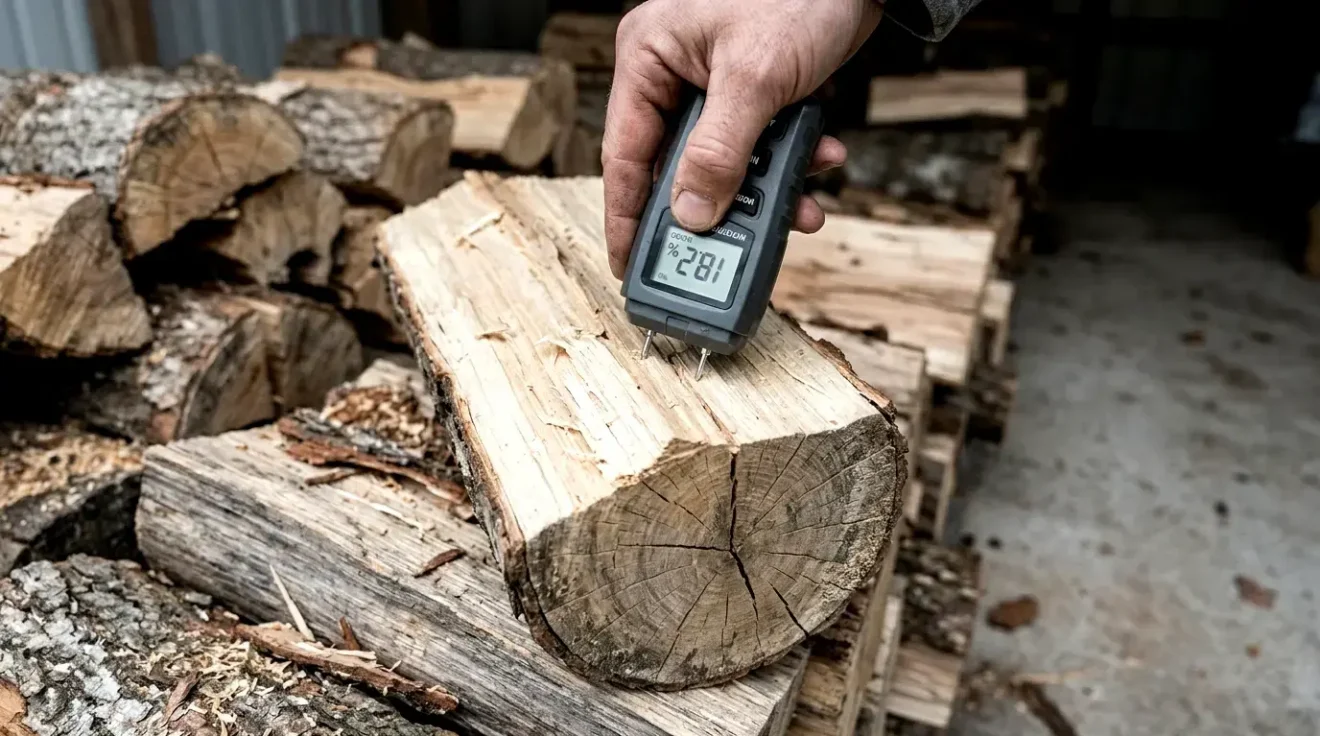
The US Environmental Protection Agency recommends firewood with a moisture content of **20% or less**. This is a useful operational benchmark, although it does not guarantee zero emissions or eliminate the need for chimney maintenance.
A moisture meter is the most useful household tool for checking whether a log is sufficiently dry. Measurements should be taken on a freshly split face rather than relying exclusively on the outer surface, which may have dried differently from the interior.
Other signs can help identify potentially seasoned wood:
- End cracks: Radial cracks across the cut ends can indicate that the wood has lost moisture.
- Relative weight: A log that feels unusually heavy compared with a similarly sized log of the same species may retain more water.
- Bark condition: Loose bark and changes in colour can provide additional clues.
- Moisture reading: A reading taken from freshly exposed wood provides a more direct indication than visual appearance alone.
Storage conditions are just as important as seasoning time. Firewood should be split into manageable pieces, stacked off the ground and protected from rain and snow while retaining good airflow. Covering the top of the stack while leaving the sides ventilated helps moisture escape instead of trapping damp air around the logs.
The EPA gives general drying recommendations of at least six months for softwood and twelve months for hardwood. These periods should be treated as guidance rather than guarantees: climate, species, log dimensions and storage conditions all affect the result. The actual moisture reading is more useful than assuming that wood is ready simply because it has been stored for a particular length of time.
Defra also recommends moisture checks and proper storage, and advises allowing self-sourced logs to air-dry for at least two years. Its guidance and the EPA’s shorter general recommendations reflect different institutional advice, reinforcing why homeowners should assess actual dryness rather than depend on a universal calendar.
The EPA explanation of wood-burning appliance efficiency provides further guidance on moisture, firewood preparation and the distinction between combustion efficiency and useful heat delivered indoors.
Buying wood labelled as seasoned does not remove the need for checking it. A supplier’s description is not a substitute for a moisture measurement, particularly when the fuel’s storage history is unknown.
With suitable fuel prepared, ignition technique can help establish chimney draft and limit unnecessary smoke during the first minutes of operation.
How to Light a Wood-Burning Fireplace With Less Smoke at Start-Up?
A wood-burning fireplace is less likely to produce excessive start-up smoke when the fire is built with dry kindling, progressively larger pieces of fuel and enough space for air to circulate. A top-down arrangement can help establish flames above the larger logs, while a warm, unobstructed flue supports the upward movement of smoke. The manufacturer’s instructions and the fireplace design should always take priority.
The first challenge is establishing sufficient draft. A chimney that has been unused for a long period may contain a column of cold air. If this air moves downward, it can resist the initial upward movement of smoke and make ignition difficult.
This is especially noticeable in cold weather or in homes where ventilation and extraction systems affect indoor air pressure. A cold flue is not necessarily blocked, but it may require careful attention before lighting.
The EPA recommends using natural fire starters to help warm the flue and establish draft. Any method used must be suitable for the fireplace and consistent with its operating instructions. Improvised heating methods, including burning paper in the chimney, should not replace a safe, manufacturer-compatible procedure.
The fuel arrangement also matters. In a top-down arrangement, larger logs are positioned below smaller pieces of dry kindling, with an appropriate natural fire starter near the top. Flames can then develop above the larger fuel rather than having to pass through a dense stack of unburned wood.
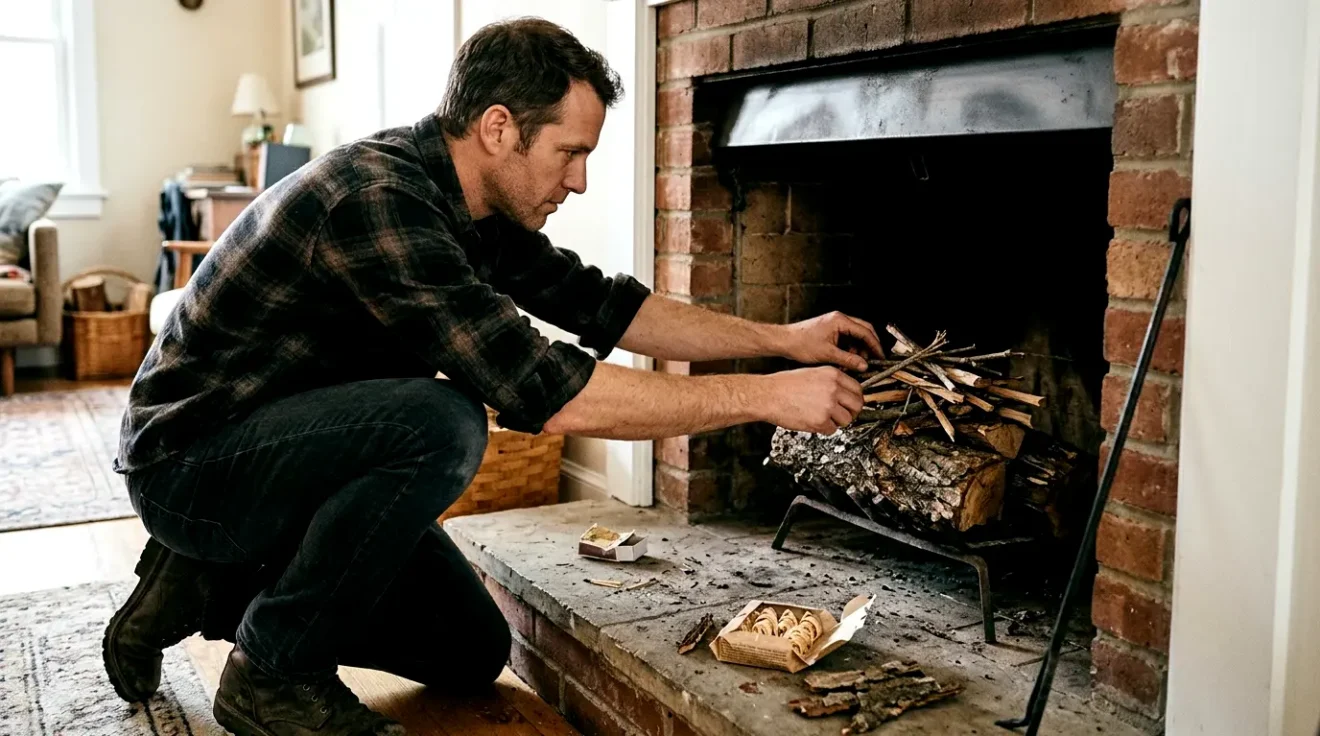
A practical ignition routine follows a logical sequence:
- Check that the fireplace is suitable for use, that the flue is unobstructed and that the damper is fully open.
- Arrange appropriately sized, dry logs while leaving gaps for combustion air.
- Place small, dry kindling and a suitable natural fire starter above the larger fuel when using a top-down arrangement.
- Light the fire according to the appliance manufacturer’s instructions, allowing the kindling to establish flames without restricting airflow.
- Add smaller pieces of firewood gradually as the fire develops, rather than immediately loading the fireplace with oversized logs.
The damper must remain in the correct open position while an open fireplace is burning. Closing it prematurely can cause smoke and combustion gases to enter the room. Enclosed appliances have their own air-control arrangements, so their controls should be operated according to the manufacturer’s instructions rather than by applying open-fire practices indiscriminately.
The EPA’s tips for starting and maintaining a wood fire support the use of small, dry kindling, adequate airflow, gradual additions of fuel and natural fire starters for establishing chimney draft.
Start-up is also a useful diagnostic opportunity. If smoke repeatedly enters the room despite suitable dry fuel, an open damper and an appropriate lighting method, the problem may involve a flue obstruction, inadequate chimney draft or competing extraction systems. Kitchen hoods and bathroom fans can contribute to negative indoor pressure, depending on the building’s ventilation arrangements.
A lighting technique should not become a way to compensate for a defective chimney. Persistent smoke problems require investigation by a qualified professional rather than increasingly elaborate ignition methods.
Even after a fire has been established, smoke can escape during refuelling. Understanding why this happens helps distinguish an occasional operating issue from a more serious system fault.
Why Does Smoke Enter the Room When You Add Logs to a Wood Fire?
Smoke can enter a room when logs are added because opening a fireplace door or disturbing the fire temporarily changes the movement of air and smoke inside the appliance. If the chimney draft is weak, the firebox receives insufficient replacement air or the house is under negative pressure, smoke may spill into the living space instead of travelling upwards. Repeated smoke spillage should never be dismissed as normal.
In an enclosed wood stove, opening the door changes the airflow conditions that have been established inside the combustion chamber. The smoke that was previously moving towards the flue can escape through the opening if the draft is insufficient to maintain the intended flow.
In an open fireplace, smoke behaviour is also influenced by the shape and size of the opening, chimney performance and air movement within the room. Disturbing the logs can release additional smoke, while placing a large piece of wood on a fire with insufficient air can temporarily reduce combustion intensity.
A careful refuelling routine can reduce avoidable spillage:
- Prepare the next logs and fire tools before approaching the fireplace.
- For an enclosed stove, follow the manufacturer’s refuelling instructions and open the door slowly rather than pulling it wide open immediately.
- Allow the air conditions to adjust as recommended for the appliance before opening it fully.
- Use a suitable fire tool to reposition embers and logs, keeping hands away from hot fuel and the firebox.
- Add appropriately sized logs without smothering the established bed of embers or blocking the air passages.
The EPA specifically recommends opening an enclosed stove door slowly when reloading to reduce the likelihood of smoke spilling into the room. That recommendation should not be interpreted as a universal procedure for every open fireplace or appliance.
If smoke continues to enter the room despite careful handling, the underlying cause needs attention. Possible explanations include:
- Insufficient draft: The chimney may not be producing adequate upward airflow under the current operating conditions.
- Flue obstruction: Deposits, debris or another restriction may interfere with smoke movement.
- Building depressurisation: Kitchen extractors, bathroom fans and other ventilation equipment may alter the pressure balance inside the house.
- Installation limitations: Chimney configuration, flue dimensions or the appliance’s compatibility with the installation may affect performance.
Repeated indoor smoke exposure is more than a nuisance. Wood smoke contains harmful pollutants, and combustion gases can include carbon monoxide, which is colourless and odourless. A carbon monoxide alarm is therefore an important safeguard, but the absence of an alarm does not establish that smoke spillage is harmless.
If smoke repeatedly escapes, stop using the appliance until the cause has been assessed. Follow the manufacturer’s safety instructions, ventilate the affected area when safe to do so, and seek professional assistance. If a carbon monoxide alarm activates or anyone experiences symptoms consistent with exposure, leave the building and contact the appropriate emergency service.
Refuelling problems often reveal weaknesses that are less obvious when the fireplace is burning steadily. Correcting the underlying draft or ventilation issue is more important than perfecting the movement used to add another log.
Air quality also depends on what is placed in the firebox. Even a well-maintained fireplace can produce harmful smoke when unsuitable materials are used as fuel.
Why Burning Painted Timber or Household Waste Can Make Fireplace Smoke More Toxic
Painted timber, treated wood and household waste should not be burned in a domestic wood fireplace. These materials can release harmful pollutants when heated, including substances associated with coatings, preservatives, adhesives and plastics. Burning them also increases the risk of unsuitable combustion residues and exposes household members and neighbouring properties to avoidable smoke pollution.
Clean, untreated natural wood behaves differently from manufactured or chemically treated materials. Paints, varnishes, stains, preservatives and glues may contain substances that should not be released through uncontrolled household combustion. Similarly, household plastics and other waste materials can produce hazardous emissions when burned.
The composition of the smoke depends on the material involved. Treated or painted timber can release harmful chemical compounds and contaminated particles, while burning household plastics can generate pollutants associated with their constituent materials. Some manufactured products also contain adhesives or other substances that are not intended for combustion.
This is why apparently convenient free fuel can be a poor choice. Old furniture, demolition offcuts, painted shelving, construction timber and discarded boards may appear suitable because they contain wood. Their appearance, however, does not establish that they are untreated or safe to burn.
Common examples of unsuitable materials include:
- Painted, varnished or stained wood.
- Preservative-treated garden timber and fencing.
- Old furniture with unknown finishes or glued components.
- Medium-density fibreboard (MDF) and other manufactured wood panels.
- Household waste, packaging and plastics.
- Wood with unknown coatings, chemical treatments or contaminated surfaces.
The simplest sorting rule is to use only **clean, natural, untreated and adequately seasoned firewood**. If the origin or treatment history of a piece of timber is uncertain, it should be excluded from the fire rather than treated as a potentially free fuel source.
Defra explicitly advises against burning painted, treated or chemically treated wood. Its guidance also identifies old furniture, pallets and MDF among unsuitable materials. These recommendations reflect concerns about pollutants and the effects of inappropriate domestic combustion.
There are practical consequences beyond air quality. Unsuitable materials can contribute to deposits and residues in the flue, complicate maintenance and potentially affect the condition of fireplace components. Burning waste also creates avoidable smoke that can affect neighbours and may breach local smoke-control or waste-burning restrictions.
Rules differ between countries and, in some cases, between local jurisdictions. In the United Kingdom, for example, additional restrictions apply in smoke control areas. Defra’s recommendations and the Ready to Burn scheme should not automatically be treated as the legal framework for the United States, Canada, Australia or other English-speaking markets.
For homeowners, the responsibility is therefore broader than keeping flames contained within the firebox. A wood-burning fireplace involves managing the quality of fuel entering the home and the emissions leaving it.
Once suitable fuel has been selected, planning its supply and checking fireplace equipment ahead of the colder months can make winter operation considerably more manageable.
When Should You Prepare Firewood and Fireplace Equipment for Winter?
Firewood and fireplace equipment should be prepared well before the first cold spell, ideally as part of a year-round household routine. Wood needs months of suitable drying conditions, while the fireplace, chimney and safety equipment should be checked early enough to allow professional repairs. Waiting until autumn to organise everything can create unnecessary pressure.
Firewood preparation is particularly important because seasoning cannot be rushed simply by purchasing logs shortly before winter. The wood used during the coming heating season should ideally have been split and stacked well in advance. Actual readiness depends on moisture content and storage conditions, not just the date of purchase.
A seasonal approach helps divide the work into manageable stages.
| Period | Priority | Practical result |
|---|---|---|
| Spring | Split and stack firewood, keeping it raised off the ground and protected from precipitation. | A properly arranged supply with good airflow for drying. |
| Summer | Check the condition of the fireplace, chimney and equipment. Arrange professional inspections and any necessary repairs. | Time to resolve defects before regular winter use. |
| Early autumn | Measure firewood moisture, verify the operating condition of the damper and equipment, and confirm that the fireplace is ready for use. | A suitable fuel supply and a checked installation. |
| During winter | Use appropriate dry fuel, operate the appliance correctly and monitor smoke and draft behaviour. | More consistent operation and earlier recognition of developing problems. |
The equipment check should cover more than the logs themselves. A practical inventory includes:
- Damper and door seals: Confirm that moving components operate correctly and that seals show no obvious deterioration.
- Grate and fire tools: Check for damage and ensure tools are appropriate for the fireplace design.
- Ash container: Use a suitable metal container with a lid and keep it away from combustible materials.
- Fireguard: Verify that the guard is stable and appropriate for the fireplace opening.
- Moisture meter: Check that the instrument functions correctly and is available for testing freshly split wood.
- Fire safety equipment: Verify that carbon monoxide alarms and other appropriate safety devices are correctly maintained.
Ash management deserves particular attention. The EPA recommends removing ash only after it has cooled and placing it in a metal container kept away from combustible materials. Ash should never be assumed harmless simply because visible flames have disappeared.
There is also a purchasing consideration. Firewood demand can increase as colder weather approaches, making early planning useful for comparing suppliers, securing a suitable quantity and checking the product before committing to a large purchase. However, autumn purchases are not automatically damp or overpriced; the important question is whether the supplier can demonstrate appropriate moisture content and storage practices.
The seasonal calendar should also account for local weather, wood species and the drying conditions available. A covered outdoor stack with good ventilation is generally more useful than a sealed, damp storage space. Where space is limited, the amount of wood that can be stored safely may influence whether a wood-burning fireplace is practical at all.
Planning ahead turns firewood and equipment preparation into a manageable household task instead of a last-minute response to cold weather. It also creates time to arrange professional work without relying on hurried repairs.
One of the most important summer or early-autumn tasks is confirming that the chimney has been professionally cleaned and that any problems identified during the visit have been addressed.
Key Decisions Before Regular Wood Burning
- Choose the right role: An open fireplace is primarily an ambience feature, whereas a suitable closed appliance is more appropriate when useful supplemental heating matters.
- Accept the operating responsibilities: Dry untreated fuel, careful ignition, correct refuelling and suitable ash disposal are ongoing requirements rather than optional refinements.
- Plan maintenance in advance: A sound chimney and professional sweeping are essential parts of a responsible wood-burning routine.
When Is the Best Time to Schedule Chimney Sweeping Before Winter?
The best time to arrange chimney sweeping is generally towards the end of the burning season or during summer, rather than waiting until autumn. Early booking gives homeowners more time to arrange any necessary repairs before regular use resumes. The exact maintenance interval should depend on the appliance, fuel, usage intensity, chimney condition and applicable local requirements.
Chimney sweeping removes deposits that accumulate during wood burning. Soot and tar can collect along the flue walls, reducing the effective passage for smoke and increasing the risk of a chimney fire. The accumulation is influenced by the way the fireplace is operated and the quality of the fuel.
Damp firewood, restricted airflow and unsuitable operating practices can contribute to excessive smoke and deposits. This means that chimney maintenance cannot be separated from everyday fuel management. A household that burns regularly or uses poor-quality fuel may need more attention than one that operates its fireplace occasionally with properly seasoned wood.
Defra recommends having a chimney swept by a professional at least once a year. This provides a useful UK baseline, but it should not be interpreted as a universal maximum interval or a guarantee that every installation is adequately maintained by one annual visit.
A professional appointment can also help identify conditions that require further attention. Depending on the service and the inspection undertaken, the visit may reveal:
- Accumulated soot, tar or creosote deposits.
- Visible damage or deterioration affecting the accessible parts of the flue.
- Potential restrictions or signs of poor smoke movement.
- Issues that justify a more detailed inspection or specialist repair.
- Maintenance requirements specific to the installed appliance.
It is important to distinguish sweeping from a comprehensive structural inspection. A routine cleaning visit does not automatically establish that every part of a chimney liner, masonry structure or installation has been fully assessed. Homeowners should clarify what the service includes and request additional inspection where damage, persistent smoke problems or unusual odours have been observed.
There are also regulatory and insurance considerations. In some locations, local regulations, building requirements or home insurance conditions may specify maintenance obligations or request evidence of professional work. Requirements vary, so homeowners should check the actual wording of their policy and the rules applicable to their property rather than assuming that a particular dated certificate is universally mandatory.
In the United Kingdom, Defra recommends annual professional chimney sweeping and annual servicing for wood stoves. Its guidance also highlights checking stove firebricks for cracks and inspecting door seals. These appliance-specific checks are relevant when assessing a closed stove, while an open fireplace requires maintenance appropriate to its own construction.
When arranging a visit, it is useful to provide the professional with information about the appliance type, approximate usage, fuel quality and any symptoms noticed during the previous season. Smoke spillage, difficulty establishing draft, persistent odours and visible damage should be reported rather than treated as minor inconveniences.
For homeowners deciding whether a wood-burning fireplace fits their lifestyle, the practical next step is to establish the installation’s condition, expected maintenance needs and realistic heating role before committing to regular use. A professional assessment, combined with a suitable fuel plan and an honest evaluation of the household’s tolerance for daily fire management, provides a sound basis for that decision.
Is an open wood-burning fireplace a good way to heat a house?
An open wood-burning fireplace is generally better suited to creating atmosphere and providing a traditional fire experience than heating an entire house. Most traditional open fireplaces lose a substantial proportion of their heat through the chimney. A properly selected and installed closed wood stove or fireplace insert is generally a more practical option when useful supplemental heating is the priority.
What moisture level should firewood have before burning?
The EPA recommends firewood with a moisture content of 20% or less. A moisture meter should be used on a freshly split face because the outer surface may not accurately represent the moisture inside the log. Dryness also depends on species, log size, climate and storage conditions. Even correctly seasoned wood still produces emissions and requires appropriate chimney maintenance.
Can an existing open fireplace be converted into a wood-burning stove?
In many cases, a compatible fireplace insert can be installed within an existing fireplace opening. However, conversion is not automatically possible. The opening dimensions, chimney condition, flue requirements, clearances and ventilation arrangements must be assessed by a qualified professional. The original chimney may require modification or a suitable liner before the new appliance can be used.
How often should a wood-burning fireplace chimney be swept?
Defra recommends professional chimney sweeping at least once a year in its UK domestic wood-burning guidance. The appropriate maintenance frequency can vary with fuel quality, appliance type, usage and local requirements. More frequent attention may be necessary when deposits accumulate quickly or when the fireplace is used heavily. The appliance manufacturer, qualified chimney professional and applicable local rules should guide the maintenance schedule.
Is it safe to burn old furniture or leftover construction timber?
No. Old furniture and construction offcuts may contain paint, varnish, preservatives, adhesives or manufactured wood products that release harmful pollutants when burned. MDF, painted timber and treated wood should not be used as domestic fireplace fuel. Choose clean, natural, untreated and adequately seasoned firewood with a known origin instead.