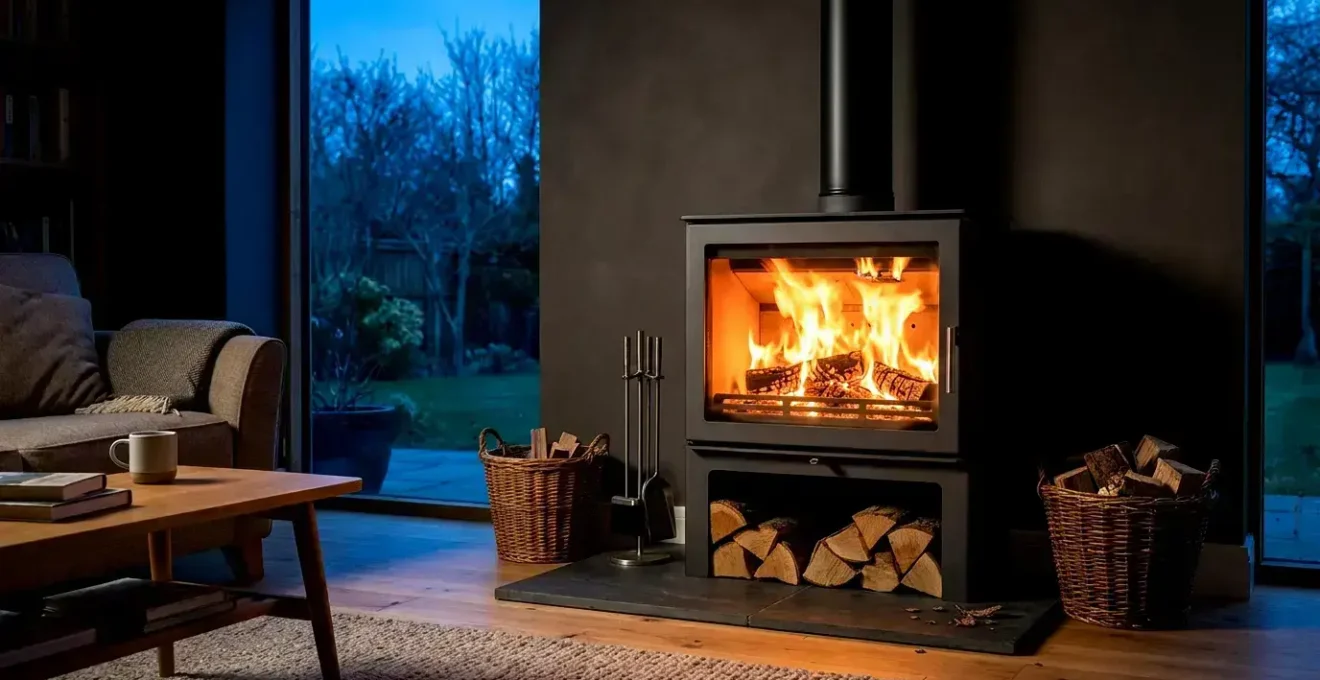
Modern wood-burning appliances improve heating efficiency by controlling how firewood releases and burns its combustible gases. Rather than allowing much of this energy to escape through the chimney as smoke, they use carefully managed airflow, insulated fireboxes and secondary combustion to extract more useful heat from the same fuel. Some models also use catalytic combustors to burn exhaust gases at lower temperatures.
These technologies explain why a modern closed wood stove or fireplace insert can perform very differently from a traditional open fireplace. However, the technology alone does not guarantee efficient heating. Firebox design, chimney performance, fuel moisture, installation quality and operating technique all influence the result. Understanding these mechanisms helps homeowners distinguish meaningful efficiency improvements from marketing claims and choose an appliance suited to their heating habits.
Modern Wood Fireplace Efficiency: Key Points
- Secondary combustion burns combustible gases released by heated wood, recovering energy that would otherwise escape through the chimney.
- Primary and secondary air controls regulate different stages of combustion and must be adjusted according to fire temperature and operating conditions.
- Catalytic and non-catalytic systems achieve cleaner combustion through different mechanisms, with different operating and maintenance requirements.
- Is a Wood-Burning Fireplace Right for Your Home and Lifestyle?
- How to Identify the Key Components of a Closed Wood-Burning Fireplace System?
- Why Does Secondary Combustion Produce More Heat From the Same Firewood?
- How to Use Primary and Secondary Air Controls on a Modern Wood Stove?
- Why Can Excessively Restricting Stove Air Controls Cause Dirty Combustion?
- Why Does a Smouldering Wood Fire Release More Particulate Pollution?
- Catalytic or Non-Catalytic Wood Stove for Occasional Home Heating?
- When Should Catalytic Combustors Be Checked for Loss of Performance?
Is a Wood-Burning Fireplace Right for Your Home and Lifestyle?
A wood-burning fireplace can be a practical supplementary heating solution when the home has a suitable chimney, access to properly seasoned firewood and an occupant willing to manage the appliance. However, efficiency depends heavily on the type of fireplace. A traditional open hearth loses substantial heat through the chimney, whereas a modern closed-combustion appliance controls airflow and burns wood gases more effectively. The distinction matters when evaluating efficiency claims.
An open fireplace primarily provides radiant warmth near the flames, while a closed wood stove or fireplace insert uses a sealed firebox to regulate combustion. Its design can retain heat for longer, encourage secondary combustion and transfer more useful energy into the room. An insert can also upgrade an existing masonry fireplace, provided the installation and flue arrangement are appropriate.
Before investing, homeowners should assess four practical considerations:
- Fuel availability: Reliable access to dry, seasoned firewood is essential. Storage space must protect logs from rain while allowing sufficient ventilation.
- Chimney suitability: The existing chimney, flue dimensions and liner must be compatible with the appliance and installation requirements.
- Local regulations: US homeowners should check applicable EPA certification requirements. In UK Smoke Control Areas, wood burning is subject to specific restrictions, including the use of appropriate Defra-exempt appliances and permitted fuels.
- Heating expectations: A wood-burning appliance is often best considered supplementary heating rather than an automatic replacement for a home’s central heating system.
There is also a lifestyle trade-off. Efficient operation requires correctly dried fuel, regular attention to air controls, ash removal and periodic inspection. A modern stove is therefore not entirely hands-off heating equipment.
For homeowners in the UK, the UK Government rules for smoke control areas explain the restrictions applying to appliances and fuels. These provisions should not be confused with US EPA certification or assumed to apply identically throughout every anglophone jurisdiction.
Ultimately, the most suitable appliance depends on whether the priority is occasional ambience, regular supplementary heating or sustained heat production. That distinction provides the starting point for evaluating the components responsible for modern combustion efficiency.
A modern closed appliance can offer considerably better control over combustion than an open hearth, but its real-world performance still depends on installation, fuel quality and everyday use.
How to Identify the Key Components of a Closed Wood-Burning Fireplace System?
A modern closed wood-burning fireplace achieves controlled combustion through several components working together: a sealed firebox, a baffle, primary and secondary air inlets, an airwash system and a correctly configured flue. Some appliances also contain a catalytic combustor. Identifying these parts helps homeowners understand how combustion is regulated, where heat is recovered and which defects can compromise performance.
The firebox is the enclosed chamber in which wood burns. Its insulated construction helps maintain the high temperatures needed for more complete combustion. Unlike an open fireplace, the closed chamber also allows the manufacturer to control the amount and direction of incoming air.
The baffle, usually positioned near the top of the firebox, is particularly important. It redirects hot combustion gases through a longer internal path before they enter the flue. This increases their residence time in the hot combustion zone and gives secondary air more opportunity to ignite unburned gases. A warped, damaged or missing baffle can therefore compromise the appliance’s intended combustion process.
Other components perform complementary functions:
- Primary air inlet: Supplies combustion air to the lower fire and supports ignition and the initial burning stage.
- Secondary air inlet: Introduces additional air into the upper firebox, where combustible gases can ignite.
- Glass airwash: Directs air across the inside surface of the viewing glass to reduce soot deposition.
- Flue or chimney liner: Provides the exhaust route for combustion gases and contributes to the draught required for reliable operation.
- Catalytic combustor: Where fitted, uses a coated honeycomb structure to promote oxidation of combustible exhaust compounds at a lower ignition temperature.
It is also important to distinguish a factory-built closed fireplace from an insert installed inside an existing open masonry fireplace. A factory-built unit is designed as an integrated appliance with its own specified enclosure and flue arrangement. An insert is intended to fit into an existing fireplace opening and normally requires a suitable flue connection or liner. Their installation requirements and airflow arrangements are not interchangeable.
For homeowners assessing an existing appliance, the following five checks provide a practical starting point.
A five-step inspection checklist for a closed wood-burning system
- Inspect the firebox and baffle for warping, cracks, displacement or missing components. Record any visible damage.
- Check the door gasket using a paper strip between the door and frame. Note whether the paper is held firmly or slips out easily at different positions.
- Move the primary and secondary air controls through their intended operating ranges. Record any sticking, obstruction or restricted movement.
- Check the accessible flue and chimney arrangements for visible obstructions or signs of damage, and arrange professional inspection where required.
- Identify whether the appliance is a factory-built closed fireplace, an insert or a catalytic model. Record its make, model and manufacturer maintenance instructions.
These observations are preliminary checks rather than a substitute for a qualified chimney or appliance inspection. A paper-strip test, for example, can reveal an apparently poor door seal but does not establish that the entire installation is airtight or safe.
Once the airflow path and internal components are understood, the central efficiency mechanism becomes easier to identify: modern appliances do not simply burn the wood more slowly; they also burn combustible gases that conventional fireplaces release into the atmosphere.
The condition of the baffle, air inlets, door seals and flue determines whether the appliance can operate as designed, making component inspection an important part of any efficiency assessment.
Why Does Secondary Combustion Produce More Heat From the Same Firewood?
Secondary combustion produces more usable heat from a given quantity of firewood by burning combustible gases that would otherwise leave the firebox unburned. As wood heats, it releases volatile compounds, including combustible gases and vapours. A modern closed appliance introduces preheated secondary air into this hot gas stream, allowing the compounds to ignite above the fuel bed and release additional energy inside the firebox.
This process begins before visible flames appear in the upper combustion zone. Heat causes wood to undergo pyrolysis, a thermal decomposition process that releases gases, vapours and other products. Some of these compounds are combustible and can contribute substantial energy when burned under suitable conditions.
In a traditional open fireplace, a significant proportion of these gases can escape directly through the chimney. They carry chemical energy away from the room instead of releasing it as useful heat.
Modern non-catalytic appliances address this loss through a combination of insulated fireboxes, baffles and strategically positioned secondary-air passages. The air is heated before entering the upper combustion area, helping maintain the temperature required for ignition.
The resulting process has three interconnected stages:
- Fuel heating: Firewood heats up and releases combustible gases through pyrolysis.
- Gas mixing: Preheated secondary air mixes with these gases above the burning wood.
- Secondary ignition: When temperature, oxygen availability and mixing are suitable, the gases ignite and release additional heat.
The chimney provides a useful, although imperfect, visual indicator. During an established burn, persistent dark smoke can indicate incomplete combustion and the escape of unburned particles and other compounds. A cleaner, nearly invisible exhaust plume generally indicates better combustion conditions, although outdoor temperature, moisture and condensation can also affect its appearance. Smoke appearance alone cannot certify appliance efficiency or emissions compliance.
The US Environmental Protection Agency’s technical chapter, EPA’s technical chapter on residential wood stove emissions, describes how modern non-catalytic designs use baffles and secondary combustion, while catalytic models treat exhaust gases through a different mechanism. Although this technical publication dates from October 1996, it remains useful for understanding the underlying combustion principles rather than evaluating current product performance.
Secondary combustion therefore recovers energy from the gases released by the wood, rather than creating additional energy from the fuel itself. The effectiveness of this process depends on maintaining sufficient firebox temperature, providing the correct air supply and ensuring that the gases remain in the combustion zone long enough to ignite.
This is precisely why modern wood stoves incorporate adjustable air controls: they regulate the conditions required to maintain both the initial fire and the subsequent gas-burning stage.
However, secondary combustion cannot operate reliably if the firebox becomes too cool or the air supply is restricted prematurely, making correct control operation essential.
How to Use Primary and Secondary Air Controls on a Modern Wood Stove?
Primary and secondary air controls regulate different stages of combustion in a modern wood stove. Primary air supports ignition and the initial burning of the fuel, while secondary air supplies oxygen to the upper combustion zone where released gases can ignite. Efficient operation involves using sufficient air during startup, then reducing the primary supply gradually once the firebox reaches operating temperature.
Although the exact control arrangement differs between manufacturers, the underlying operating principle is broadly similar. The initial fire needs sufficient oxygen and heat to establish a stable flame. Once the firebox and flue are warm, the appliance can rely more heavily on its secondary-air system to sustain combustion of the released gases.
A practical lighting-to-cruise sequence follows these stages:
- Start with adequate primary air: Follow the manufacturer’s lighting instructions and open the designated startup controls. Use appropriately sized dry kindling and firewood to establish a vigorous flame.
- Allow the appliance to warm up: Keep sufficient airflow while the fuel ignites and the firebox and flue begin reaching their operating temperatures.
- Reduce primary air progressively: Once the fire is established, adjust the primary control according to the appliance instructions rather than immediately shutting it completely.
- Maintain secondary combustion: Allow the secondary-air system to support the burning of combustible gases in the upper firebox.
- Monitor the fire and exhaust: Look for sustained flames, stable heat output and the absence of persistent dark smoke after startup.
The distinction between primary and secondary airflow is particularly important because the controls do not necessarily operate independently. Some stoves have a single adjustable control that influences multiple air passages, while others provide separate controls or automatic airflow management.
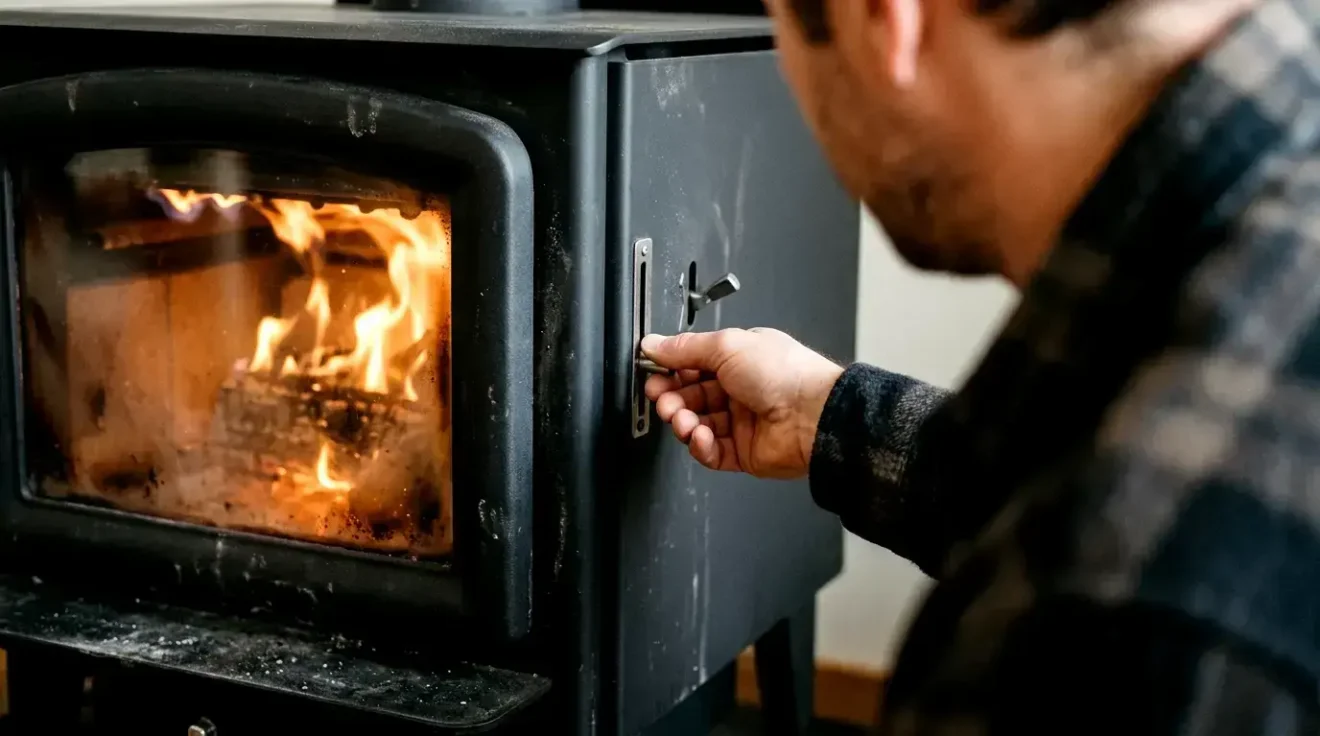
A common mistake is to interpret efficient operation as keeping the air controls almost completely closed. This can reduce the firebox temperature below the level required for reliable ignition of combustible gases. The result is not necessarily a more efficient slow burn: it may be a smoky, incomplete combustion process.
Repeatedly adjusting the controls can also make operation less consistent. Instead, homeowners should learn the behaviour of their particular appliance, including its recommended startup conditions and the point at which the fire is established.
The chimney offers useful feedback, but it must be interpreted alongside flame behaviour, fuel condition and appliance temperature. Persistent dark smoke after the startup phase is a reason to investigate airflow, moisture and draught rather than simply accepting the setting as normal.
There is no universal control position suitable for every wood stove. Manufacturer instructions, firewood characteristics and the condition of the chimney determine the correct settings and adjustment sequence.
Why Can Excessively Restricting Stove Air Controls Cause Dirty Combustion?
Excessively restricting a wood stove’s air supply can cause dirty combustion because the firebox loses the oxygen and temperature conditions needed to burn released gases completely. The wood may continue heating and producing smoke, but those combustible compounds are not necessarily ignited. Instead of recovering their energy as useful heat, the appliance releases more pollutants and deposits additional residue inside the flue.
This problem is particularly common when homeowners attempt to extend burn duration by closing the air controls too early. Although a reduced air supply can slow fuel consumption, it can also lower combustion temperatures to a level where secondary ignition becomes unreliable.
The consequences extend beyond reduced heating performance:
- Creosote accumulation: Incomplete combustion can increase deposits of combustible residue in the chimney and flue, raising the risk of a chimney fire.
- Blackened viewing glass: Soot deposits can obscure the flames and indicate poor combustion conditions.
- Reduced useful heat: Energy leaves the appliance in unburned gases and particles rather than being transferred into the room.
- Internal component contamination: Soot and tar deposits can affect the condition and operation of internal combustion components.
Overnight smouldering is a particularly problematic strategy. Keeping a fire barely alight for extended periods by severely restricting its air supply can produce prolonged incomplete combustion. A cleaner operating approach is to follow the appliance manufacturer’s guidance and allow the fire to burn down naturally rather than forcing an extended smoulder.
When smoke persists at low settings, the correct response is to investigate the cause before making further adjustments. Several factors can produce similar symptoms:
- Insufficient airflow: Open the relevant controls slightly and observe whether combustion improves.
- Wet firewood: Check the moisture content rather than assuming the control setting is responsible.
- Cold flue: A cold chimney may not establish adequate draught, especially during startup.
- Restricted chimney: Obstructions or deposits may compromise exhaust flow and require professional attention.
These causes should not be confused with one another. For example, opening the air controls may improve a fire affected by insufficient oxygen, but it will not correct an obstructed chimney or unsuitable fuel.
Likewise, increasing airflow indefinitely is not a substitute for correct installation or maintenance. Persistent smoke, unusual odours or poor draught should be investigated, with professional assistance where necessary.
The key operating principle is that a controlled fire is not the same as a starved fire. A modern stove is designed to regulate combustion while retaining enough heat and oxygen to burn released gases effectively.
Maintaining an active, appropriately controlled fire is therefore important not only for heat output but also for reducing unnecessary smoke and particulate emissions.
Why Does a Smouldering Wood Fire Release More Particulate Pollution?
A smouldering wood fire releases more particulate pollution because it operates under conditions that prevent many combustible gases and organic compounds from burning completely. When the firebox temperature or oxygen supply is insufficient, these compounds escape as smoke and fine particles instead of being oxidised in the flame. A hot, actively burning fire with suitable airflow generally produces cleaner combustion than prolonged low-temperature smouldering.
Wood combustion involves several simultaneous processes. Heating the fuel releases volatile compounds, while the remaining solid material continues to burn as charcoal. When temperatures are high enough and oxygen is adequately supplied, many of the released gases and vapours can ignite. If these conditions are absent, a larger proportion of the products of incomplete combustion leaves the appliance through the chimney.
These emissions include particulate matter, carbon monoxide and volatile organic compounds. Their production varies according to fuel moisture, appliance design, operating conditions and the stage of the combustion cycle.
For homeowners, the implications extend beyond environmental considerations. Excessive smoke can create nuisance problems, attract complaints and trigger regulatory consequences where local smoke-control provisions apply. The applicable rules vary significantly between countries and jurisdictions.
Fuel moisture is one of the most important variables. Wet wood requires energy to evaporate its water before the fuel can reach the conditions needed for effective combustion. This reduces the heat available for maintaining firebox temperature and can contribute to excessive smoke.
The US Environmental Protection Agency recommends firewood with a moisture reading of 20% or less. This measurement should be taken using an appropriate moisture meter and according to the device’s instructions, ideally on a freshly split surface rather than the exterior of an unsplit log.
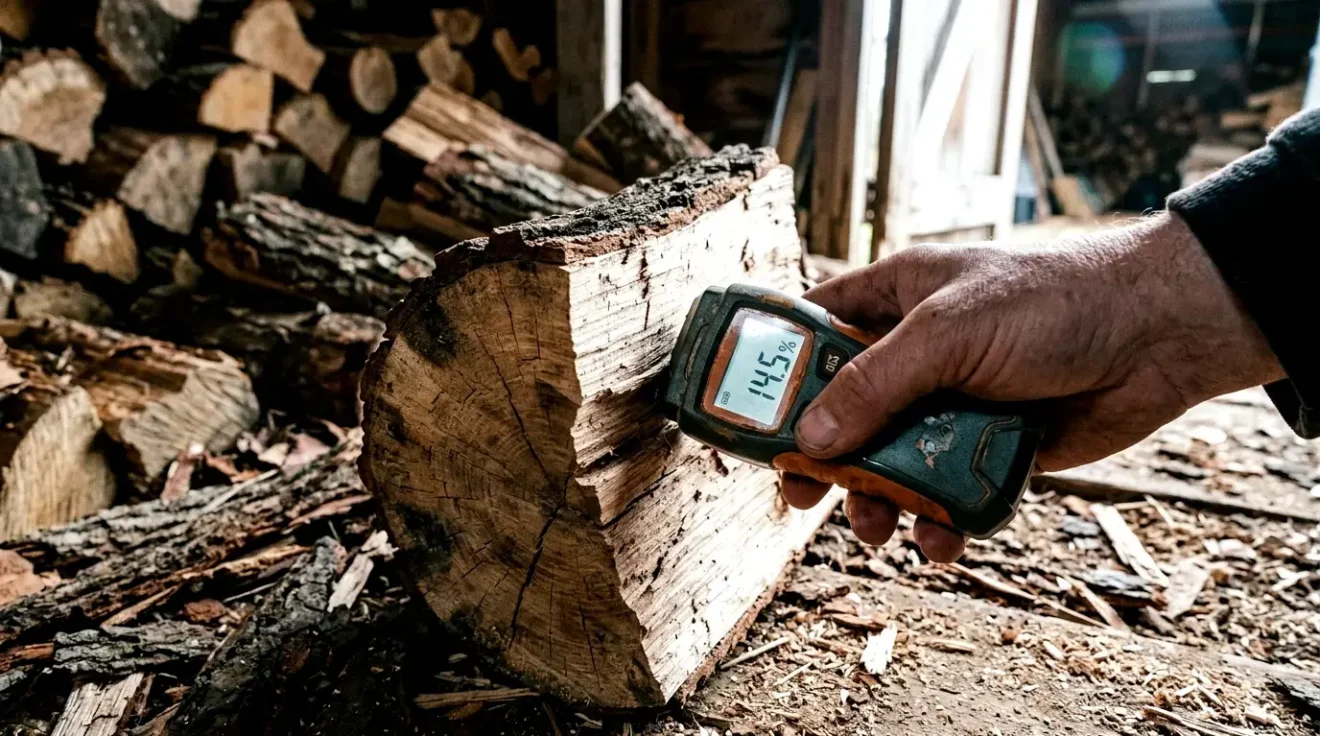
Proper storage also matters. The EPA’s guidance on wood-burning appliance efficiency recommends drying softwood for at least six months and hardwood for at least twelve months as general storage guidance. Actual drying times depend on species, log dimensions, climate and storage conditions, so a moisture measurement is more informative than relying on elapsed time alone.
Combustion cleanliness and heating efficiency are closely connected. The same conditions that support secondary combustion—sufficient temperature, appropriate airflow and properly dried fuel—also help reduce incomplete combustion and associated emissions.
However, a visually clean exhaust does not establish that an appliance meets a particular emissions standard. Compliance must be assessed against the applicable certification and regulatory requirements.
Choosing dry wood and avoiding prolonged smouldering improve the conditions inside the firebox, allowing the appliance’s combustion technology to perform as intended.
Key Considerations Before Choosing a Combustion Technology
- Match the appliance to the expected burn pattern: occasional evening use and long, sustained heating sessions do not necessarily favour the same technology.
- Compare actual certified performance rather than assuming that catalytic or non-catalytic construction automatically guarantees superior efficiency.
- Account for maintenance requirements, including catalytic combustor inspection and replacement where applicable.
Catalytic or Non-Catalytic Wood Stove for Occasional Home Heating?
A catalytic wood stove uses a coated honeycomb combustor to promote the oxidation of combustible exhaust gases at lower temperatures than those normally required by non-catalytic secondary combustion. A non-catalytic stove instead relies on an insulated firebox, baffle design and preheated secondary air. For occasional home heating, a non-catalytic model may offer simpler operation, while catalytic technology can be advantageous for longer, sustained burns.
The two systems share the same broad objective: reducing the amount of combustible material that escapes through the flue without releasing its remaining energy. Their difference lies in how they achieve ignition and oxidation.
In a catalytic appliance, exhaust gases pass through a coated ceramic or metallic honeycomb structure. The catalytic coating facilitates chemical reactions that oxidise combustible compounds at temperatures lower than those needed for equivalent direct ignition. The combustor does not supply energy itself; it helps convert residual combustible compounds into heat.
In a non-catalytic stove, the manufacturer instead uses a combination of insulation, baffles and preheated secondary air. These features maintain a sufficiently hot environment for gases to ignite without a separate catalytic component.
The US EPA’s historical guidance on catalytic and non-catalytic appliances describes the distinction between these designs and their maintenance considerations. Its older performance averages should not be treated as current market benchmarks or as a guarantee for any individual appliance.
For homeowners who use a stove occasionally, the choice should reflect the expected operating pattern rather than a simplistic ranking of the technologies.
| Criterion | Catalytic stove | Non-catalytic stove |
|---|---|---|
| Combustion mechanism | Uses a coated combustor to promote oxidation of exhaust gases. | Uses high-temperature secondary combustion, insulation and baffles. |
| Operating temperature | Can support gas oxidation at lower temperatures. | Requires sufficiently high temperatures in the secondary combustion zone. |
| Occasional use | May be suitable, but correct operating conditions and maintenance remain essential. | Often attractive because of its simpler combustion arrangement. |
| Extended burns | Can be advantageous for sustained operation and controlled heat output. | Can also provide extended heating, depending on the appliance design. |
| Maintenance | Requires inspection and eventual replacement of the catalytic element when necessary. | Has no catalytic consumable, although baffles, seals and air passages still require inspection. |
| Operating discipline | Requires adherence to the manufacturer’s catalytic operating instructions. | Requires effective airflow management to maintain secondary combustion. |
One important purchasing consideration is the finite service life of a catalytic combustor. Ash deposits, soot, thermal damage and contamination from unsuitable fuel can reduce its effectiveness. Burning painted or treated wood is particularly inappropriate because contaminants can damage combustion components and create additional emissions.
Non-catalytic models avoid this particular consumable component, but they are not maintenance-free. Their baffles, door seals and secondary-air passages must remain in good condition to sustain the intended combustion process.
Certification should also be considered independently of the technology label. In the United States, EPA certification provides a relevant reference point when comparing regulated wood-burning appliances. Certification status and tested performance are more meaningful than assuming that every catalytic stove outperforms every non-catalytic model.
For occasional evening heating, a well-designed non-catalytic appliance may provide a practical balance between simplicity and performance. For frequent, sustained heating, a catalytic design may be worth considering, particularly where its operating characteristics match the household’s requirements.
Once the technology has been selected, preserving its intended performance requires attention to the condition of its combustion components, especially when a catalytic combustor is fitted.
When Should Catalytic Combustors Be Checked for Loss of Performance?
Catalytic combustors should be checked at the beginning of the heating season, whenever combustion performance noticeably deteriorates and after an episode of overfiring or suspected use of unsuitable fuel. Warning signs include increased smoke, reduced heat output, higher firewood consumption for similar heating demands and difficulty maintaining the expected combustion behaviour. Inspection should follow the manufacturer’s instructions rather than an assumed universal replacement schedule.
A catalytic combustor is exposed to repeated heating cycles and combustion by-products. Over time, its surface can become coated with ash or soot, restricting contact between the exhaust gases and the catalytic material. Excessive operating temperatures can also damage the honeycomb structure, while contaminants from unsuitable fuels can compromise the catalytic coating.
These changes may gradually reduce the appliance’s ability to oxidise combustible exhaust compounds. The stove can continue to produce flames and heat even when the combustor is no longer performing as intended, which makes periodic inspection important.
Several symptoms can justify a closer examination:
- Increased chimney smoke: Persistent smoke during an established burn may indicate incomplete oxidation, although fuel moisture, draught and airflow must also be investigated.
- Higher fuel consumption: Needing more wood to obtain comparable heating performance can indicate a change in combustion or heat transfer.
- Reduced heat output: A noticeable deterioration under otherwise similar operating conditions deserves investigation.
- Visible damage: Cracks, missing sections, loose material or substantial deterioration of the honeycomb element indicate that the component may no longer be serviceable.
- Unusual operating behaviour: Difficulty maintaining the expected catalytic operating conditions can justify checking the combustor and the rest of the appliance.
Where a thermometer is fitted, its readings can help establish whether the combustor has reached the operating temperature specified by the manufacturer. However, temperature alone does not prove that the catalyst remains chemically effective.
Inspection should begin with the appliance cold and fully shut down. The combustor should be accessed and examined according to the manufacturer’s maintenance procedure. Gentle cleaning may be appropriate for removable deposits, but only when specifically permitted by the manufacturer. Aggressive brushing or scraping can damage the catalyst.
A physically cracked, distorted or otherwise damaged combustor generally requires replacement rather than cleaning. Replacement parts should match the appliance specifications, since combustor dimensions and construction are model-dependent.
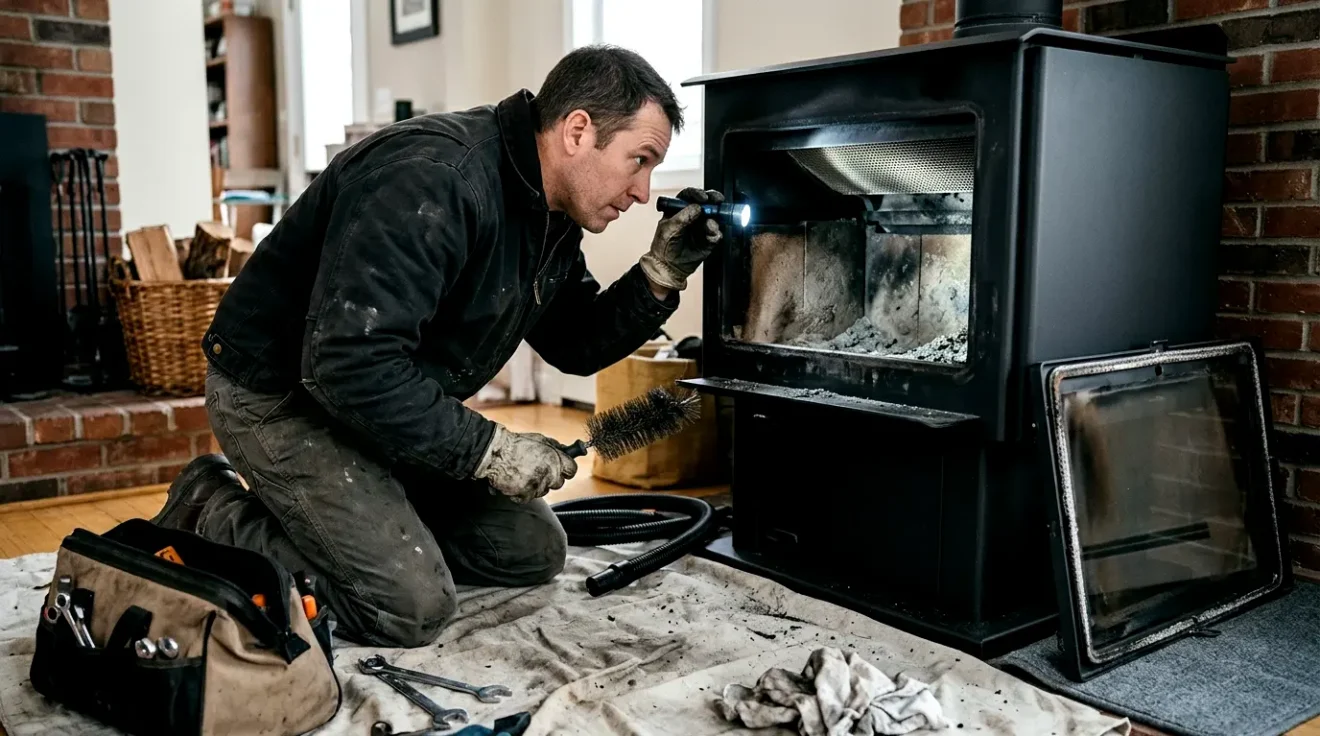
Maintenance frequency should reflect actual use and the manufacturer’s recommendations. A stove used frequently throughout the winter may require closer monitoring than one operated occasionally. A start-of-season inspection provides a useful baseline, while additional checks are sensible after overfiring or suspected contamination.
It is also important not to attribute every deterioration in heating performance to the catalytic element. Wet firewood, poor chimney draught, obstructed air passages and damaged door seals can produce similar symptoms. Diagnosing these factors together avoids unnecessary replacement of an otherwise serviceable combustor.
For homeowners comparing modern wood-burning appliances, the most reliable approach is to combine appropriate technology, correctly seasoned firewood, disciplined operation and regular maintenance. These conditions allow the combustion system to deliver the heat recovery and emissions performance its design is intended to provide. Before choosing a model, compare its certified performance, installation requirements and maintenance instructions against the household’s actual heating needs.
What is the difference between combustion efficiency and overall efficiency?
Combustion efficiency measures how effectively the appliance converts the energy in wood into heat through combustion. Overall efficiency measures how much of that heat is actually transferred into the heated space. Heat losses through the flue, appliance surfaces and other parts of the installation can make overall efficiency lower than combustion efficiency. The US EPA explains this distinction in its guidance on wood-burning appliance efficiency.
Does a cleaner chimney exhaust always mean a more efficient wood stove?
A nearly invisible exhaust plume during an established burn can indicate more complete combustion because fewer unburned particles and compounds are escaping. However, chimney appearance is not a definitive efficiency measurement. Outdoor conditions, condensation, fuel quality and combustion phase can influence what is visible. Certified performance data and correct installation provide a more reliable basis for comparing appliances.
Can modern wood-burning fireplaces use wet or freshly cut wood?
Modern wood-burning appliances should be operated with appropriately seasoned firewood, not freshly cut or excessively wet logs. Moisture consumes energy during evaporation, reduces combustion temperature and can increase smoke production. The US EPA recommends a moisture reading of 20% or less for firewood. A moisture meter provides a more reliable assessment than judging dryness by appearance alone.
Are catalytic wood stoves always more efficient than non-catalytic models?
No. Catalytic and non-catalytic appliances use different mechanisms to burn combustible gases, and either technology can deliver effective heating performance. Actual efficiency depends on the appliance’s design, certification, installation, fuel and operating conditions. Catalytic models can be particularly useful for sustained burns, while non-catalytic models may appeal to homeowners who prefer a simpler combustion arrangement with no catalytic element to maintain.
How often should a modern wood-burning fireplace and chimney be serviced?
Inspection and cleaning frequency should follow the appliance manufacturer’s instructions and the applicable local chimney-safety requirements. The condition of the flue, the amount of use, fuel quality and evidence of creosote accumulation all matter. Catalytic combustors should also be checked according to their manufacturer’s maintenance guidance, particularly at the beginning of the heating season and after suspected overfiring or fuel contamination.